By
Michael Bird
•
16
min read


Sales and marketing in the apartment sector has entered a more disciplined, data-driven phase. Buyers are better informed, product expectations are higher, and the margin for error has narrowed. What worked five or ten years ago no longer delivers the same results, particularly in competitive coastal markets like the Gold Coast.
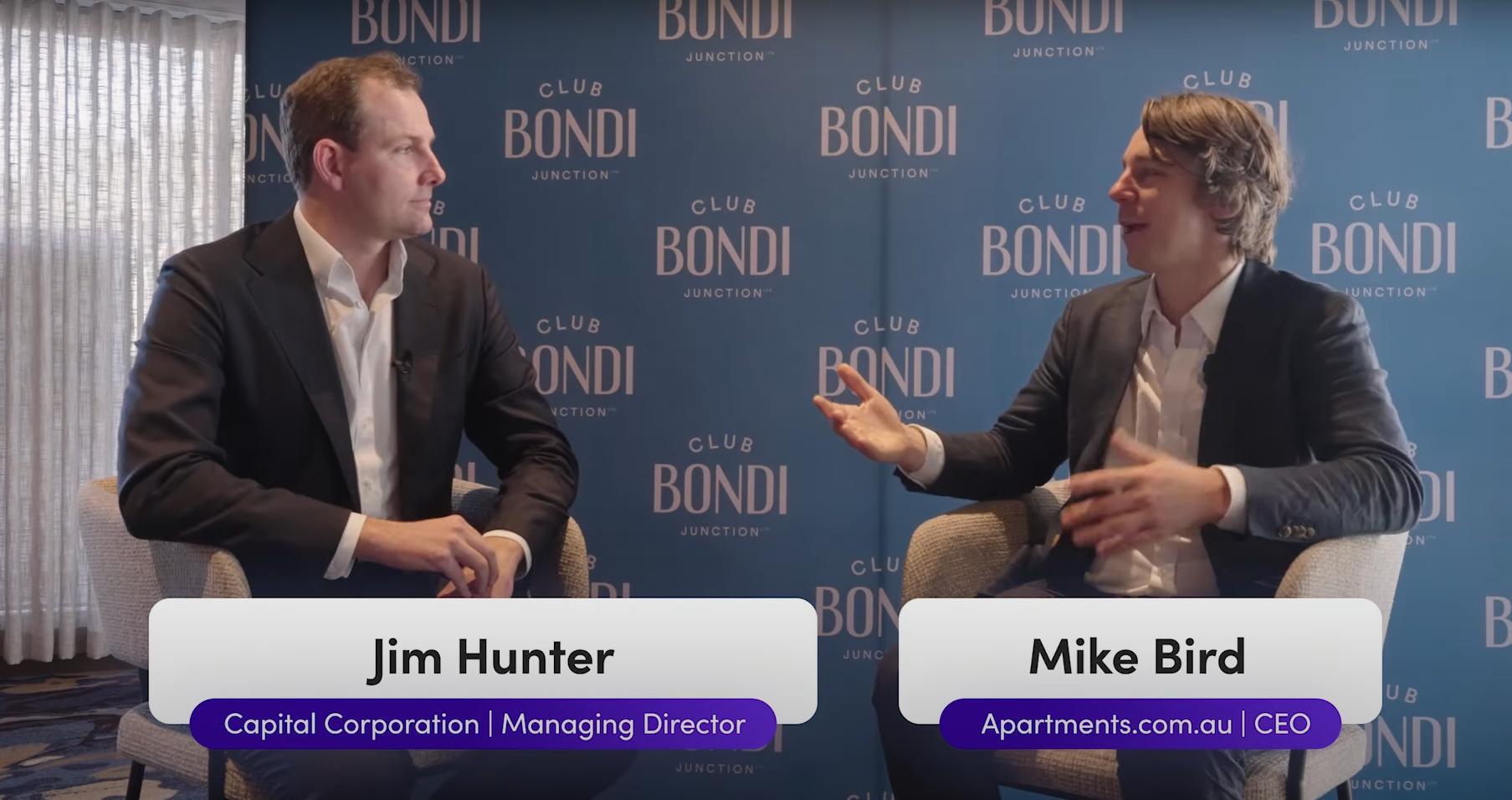
In this Market Insights session, Mike Bird, CEO of Apartments.com.au, is joined by Nick Clydesdale (SRQ Residential), Jayde Pezet (Pezet Matheson) and Matthew George (Urban Activation) to unpack how apartment sales and marketing is evolving, what buyers are really responding to, and where developers are getting it right or wrong.
All three panellists agree that the single biggest shift over the past decade has been buyer education.
Nick Clydesdale notes that when he first arrived on the Gold Coast, buyers were far less informed and far more price driven. Today, they arrive armed with research, comparisons and strong views on developers, builders, orientation, finishes and long-term value.
He uses a simple illustration of how expectations have changed.
In the past, the developer profile sat quietly at the back of the brochure. Increasingly, it belongs on the cover.
This shift has forced sales and marketing teams to lift the standard of storytelling, transparency and justification around every project. Buyers want to know who is delivering the project, what else they have built, and why this product deserves their confidence.
Another clear change is the move away from traditional, largely untrackable marketing toward digital channels that allow developers to understand exactly how buyers engage.
Digital has not just changed where money is spent. It has changed how decisions are made.
Nick highlights that while tools like AI and automation are often discussed, their role remains limited at the point of genuine buyer commitment. For high-value purchases, whether that is two million or twenty million dollars, buyers still want to speak with a person.
The emerging consensus is that technology works best as an enabler, not a replacement. AI can help surface dormant leads, prioritise databases and reduce manual workload, but it does not replace human judgement, tone, or trust in complex decision making.
Matthew George reflects on how quickly buyer standards have tightened since arriving on the Gold Coast in 2020. During the peak of demand, almost any product would sell. That environment has disappeared.
Each year since, buyer expectations have become more defined. Orientation matters. Developer credibility matters. Builder reputation matters. Finishes, layouts and amenity matter.
The sales task has not become harder so much as more precise. Buyers are not hesitant. They are selective.
This is particularly visible in a regional market like the Gold Coast, where many sales teams are speaking to the same pool of buyers. Competition is real, and differentiation must be genuine.

The panel also discusses the distinction between local and interstate buyers.
While locals may have stronger views on micro-locations, many interstate buyers initially search at a suburb or city brand level. “Gold Coast” is the first filter. Refinement comes later.
That places responsibility on sales teams to guide buyers through the journey, educating them on value, trade-offs and relative pricing between beachside and near-beach locations.
Jayde Pezet notes that this process varies depending on buyer intent. Investors, downsizers, lifestyle purchasers and future relocators all ask different questions. The key skill is reading the buyer and adapting the conversation accordingly.

The conversation around AI is practical rather than theoretical.
All panellists agree that AI is not yet suited to first contact or deep sales conversations. Where it shows promise is in re-engaging older databases, identifying which historic leads still have intent, and doing so more cost-effectively than assigning large teams to cold follow-up.
Once a buyer shows genuine interest, the handover to a skilled agent remains essential. Nuance, mirroring, trust and in-person engagement cannot be automated.
A strong theme throughout the discussion is that the most effective sales and marketing outcomes are determined long before a project launches.
Nick Clydesdale describes the importance of understanding why a buyer will buy before any advertising goes live. Predicting the future perfectly is impossible, but teams can analyse past behaviour, current constraints and emerging trends to narrow the margin for error.
Rather than focusing only on why buyers purchase, Nick argues that understanding why they do not buy is often more valuable. Objections, hesitation and stalled decisions provide clearer insight than positive feedback alone.

Matthew George reinforces that the best project marketers are involved well before launch, often 12 months or more in advance.
Urban Activation works with developers during site analysis, product design, apartment mix and pricing strategy, not just at the point of sales execution. Lessons from past projects, including failures, feed directly into future decisions.
This early involvement allows teams to avoid misalignment between product and market, which is increasingly costly in a tighter environment.
While data and CRM insights now underpin much of the industry, Jayde Pezet emphasises the importance of relationships and openness.
The Gold Coast and South East Queensland remain relatively small markets. Project marketers talk to each other. Feedback travels quickly. When one project struggles, it affects confidence across the board.
Unlike the broader residential agency space, the project marketing sector relies on shared knowledge and collective success. Strong outcomes for one development support the market as a whole.
Looking ahead, the panel aligns on several clear themes.
There is also caution around the volume of five million dollar plus stock coming to market. Depth at the top end is finite, while the middle ground of well-priced, well-designed apartments offers broader demand.
Sales and marketing in the apartment sector has matured. It is more analytical, more selective and less forgiving of poorly aligned product.
Technology, data and AI all have a role to play, but they support the process rather than define it. The fundamentals remain unchanged. Understand your buyer, design the right product, price it within real depth, and communicate with clarity and honesty.
As this session makes clear, the projects that succeed over the next cycle will not be the loudest. They will be the most considered.
.jpeg)
Speak to the team about leveraging the Apartments.com.au audiences and services for your new development.

Greg Billings
Director of Residential Projects

Sonia Fava
Director

Nick Clydsdale
Senior Director

Heath Thompson
Director

Todd Matheson
Director

Thomas Panson
Project Sales & Marketing Agent

Scott Jessop
Head of Sales & Marketing

Alex Adams
Head of Sales & Marketing and
Head of New Business
















.jpg)








.png)





-03.png)










.png)

.png)

.png)








_page-0001.jpg)

.png)












.png)




.png)


-01.png)


