By
Michael Bird
February 17, 2026
•
30
min read


LinkedIn Live Interviews: https://www.linkedin.com/in/michaeljbird/recent-activity/events/
If 2024 was about resilience and 2025 was about recalibration, 2026 could be the year Melbourne quietly turns the corner.
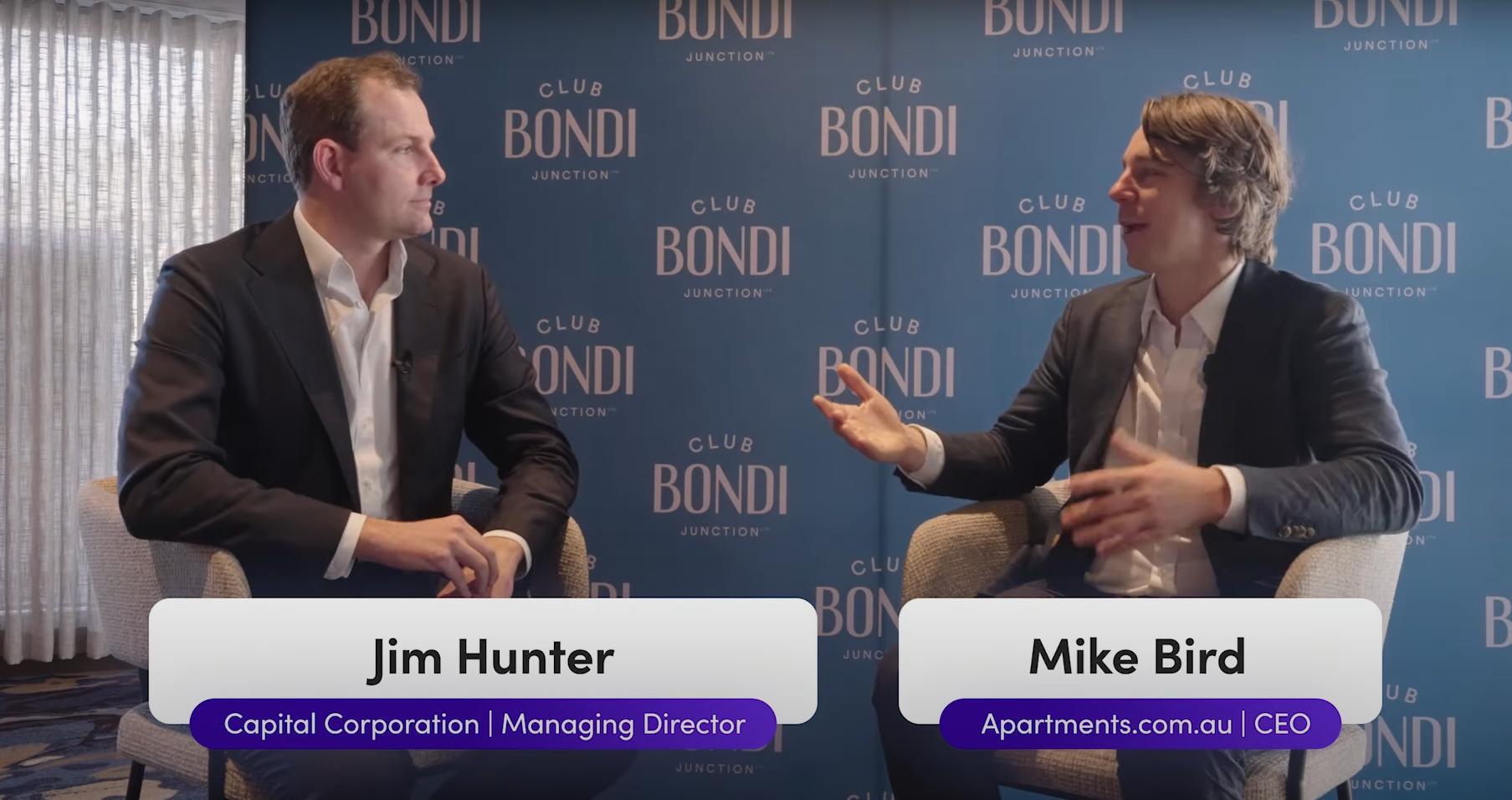
In a recent Apartments.com.au Live Q&A, Ashley Bramich of Colliers joined CEO Mike Bird to unpack where the Melbourne apartment market truly sits, what segments are moving, and what developers and buyers should be watching over the next 12 to 24 months.
Bramich’s view is clear. While Victoria has faced policy headwinds and softer sentiment, the city may be closer to the bottom than many realise.
The narrative over the past two years has often been “anywhere but Victoria”. Interstate markets such as Queensland and Western Australia have dominated headlines, while Melbourne has worked through tax changes, sentiment challenges and higher construction costs.
But that perception may now be shifting.
“We’re beginning to have conversations with a lot of people, whether it be buyers at a retail level or groups, that are thinking Victoria’s bottomed out,” Bramich said. “For those that get in now, it might not be six months, but certainly over 12, 18, 24 months we’ll look back and say this was the actual bottom.”
Evidence of that shift is already emerging. Channel groups in New South Wales and Queensland are increasingly enquiring about Melbourne stock, drawn by relative value when compared to Sydney, Brisbane and even Adelaide.
“When South Australia starts to have a higher median value than Melbourne, and WA’s had a great run, anyone looking at the property clock will probably start to look down south,” he said.

One of the biggest structural challenges for off the plan developers remains the price gap between new and established apartments.
“In Melbourne, that price gap between established and off the plan at the moment can be upwards of 30 per cent,” Bramich said. “That’s probably one of the greatest challenges that we’re actually seeing.”
For buyers, the choice is compelling. Established stock can look cheaper on face value. But new apartments offer advantages that established cannot replicate.
Why buy off the plan today?
Bramich points to several reasons. Buyers can negotiate strongly in the current market. They secure better designed and better finished product than much of the older stock. They benefit from stamp duty savings. And they gain time to organise their finances before settlement.
The task for developers and sales teams is to articulate that value clearly and consistently.
From a feasibility standpoint, the reality is stark.
“We’ve had a 30 per cent increase in construction costs and we’ve had minimal movement in gross value,” Bramich said. “When most returns on these projects are between 12 and 20 per cent, it just doesn’t work.”
This is why many projects are not proceeding. And for those that do, staging strategies are increasingly common. Developers may price more aggressively to clear the first tranche required for construction funding, then reassess market conditions in later releases.
Access to credit has improved, and in some cases pre sales hurdles are lower than in previous cycles. But margin compression remains real.

If there is one defining trend of the current cycle, it is a flight to quality.
Buyers are more educated and more discerning than ever. Brand, track record and consultant teams matter.
“We’ve never seen so many more competent and discerning developers in this marketplace,” Bramich said. “Buyers have never had so much information available to them.”
Developers such as Cassa, Orchard Piper, Piccolo, Seabus and others have doubled down on brand, architecture and delivery quality. In a softer market, that investment in reputation pays dividends.
“Developers have realised they’re in this for the long haul. Their brand matters. Their reputation is critical,” he said.
Lower tier product may still struggle with perception around defects or workmanship, but in the premium and mid market segments, strong brands continue to attract attention.
Bramich breaks the market into several price bands, from first home buyers at the lower end through to premium and uber luxury above 25,000 per square metre.
Each behaves differently.
At the premium end, particularly in the eastern suburbs, supply is active and downsizer demand remains, albeit with longer sales cycles. Conversations with $3 million to $6 million buyers can take months to convert.
“These sales can’t be rushed,” Bramich said. “You’re dealing with people who may have lived in their home for 30 or 40 years. That can be a two, three or four month process from first meeting to finalising.”
Townhouses have also been a standout performer, particularly in greenfield and middle ring markets.
“There’s no doubt townhouses have been the flavour of the month,” he said.
Price points around $650,000 to $750,000 in outer areas and circa $1.4 million in established inner east pockets are resonating with both investors and owner occupiers.
In contrast, rezoning and activity centre policies across the middle ring are not yet fully translating into viable projects. Construction costs still require higher square metre rates than many of those areas can currently support.

Foreign buyers remain an important pillar in the CBD and select large scale projects. While demand is not at the levels seen five to ten years ago, it continues to underpin new supply.
“Thank God for them,” Bramich said. “They can only buy brand new, so they’re supporting buildings that wouldn’t get out of the ground otherwise.”
With limited new sites coming forward in the CBD, upcoming major launches are already attracting interest from offshore groups seeking allocation.
So what will mark a clear turning point?
Bramich sees several leading indicators.
Channel groups returning to Melbourne is one. Stabilisation in interest rate narratives is another. But perhaps most importantly, the established housing market must begin to lift.
“What we’d love to see is the established market pick up,” he said. “If we see the established market pick up, downsizers will see their homes are worth more and become more comfortable making a move.”
As confidence returns to established housing, off the plan typically follows.
Melbourne’s apartment market remains complex. Construction costs are high. Policy settings have weighed on sentiment. The price gap to established stock is real.
But value is emerging, channels are circling, and quality developers continue to execute.
For Bramich, the message to industry participants is simple.
“Continue to work with the best people, stay positive and be solutions orientated,” he said. “Those that think that way and act that way will find an outcome and continue to move forward and be successful.”
If 2026 does mark the beginning of Melbourne’s next phase, it will not be explosive. It will be disciplined, brand led and underpinned by buyers who recognise long term value in a city that has weathered tougher cycles before.

.jpeg)
Speak to the team about leveraging the Apartments.com.au audiences and services for your new development.

Greg Billings
Director of Residential Projects

Sonia Fava
Director

Nick Clydsdale
Senior Director

Heath Thompson
Director

Todd Matheson
Director

Thomas Panson
Project Sales & Marketing Agent

Scott Jessop
Head of Sales & Marketing

Alex Adams
Head of Sales & Marketing and
Head of New Business


















.jpg)






.png)





-03.png)








.png)

.png)

.png)









_page-0001.jpg)

.png)










.png)




.png)


-01.png)


