By
Joel Robinson
May 13, 2026
•
44
min read

.png)
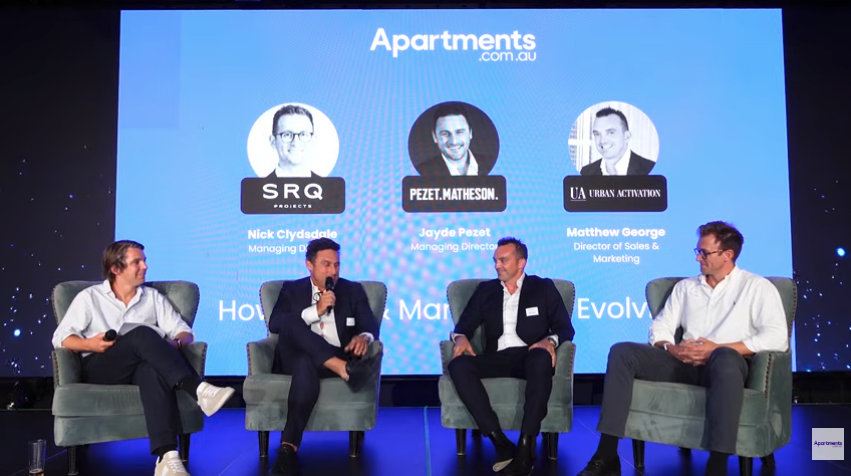
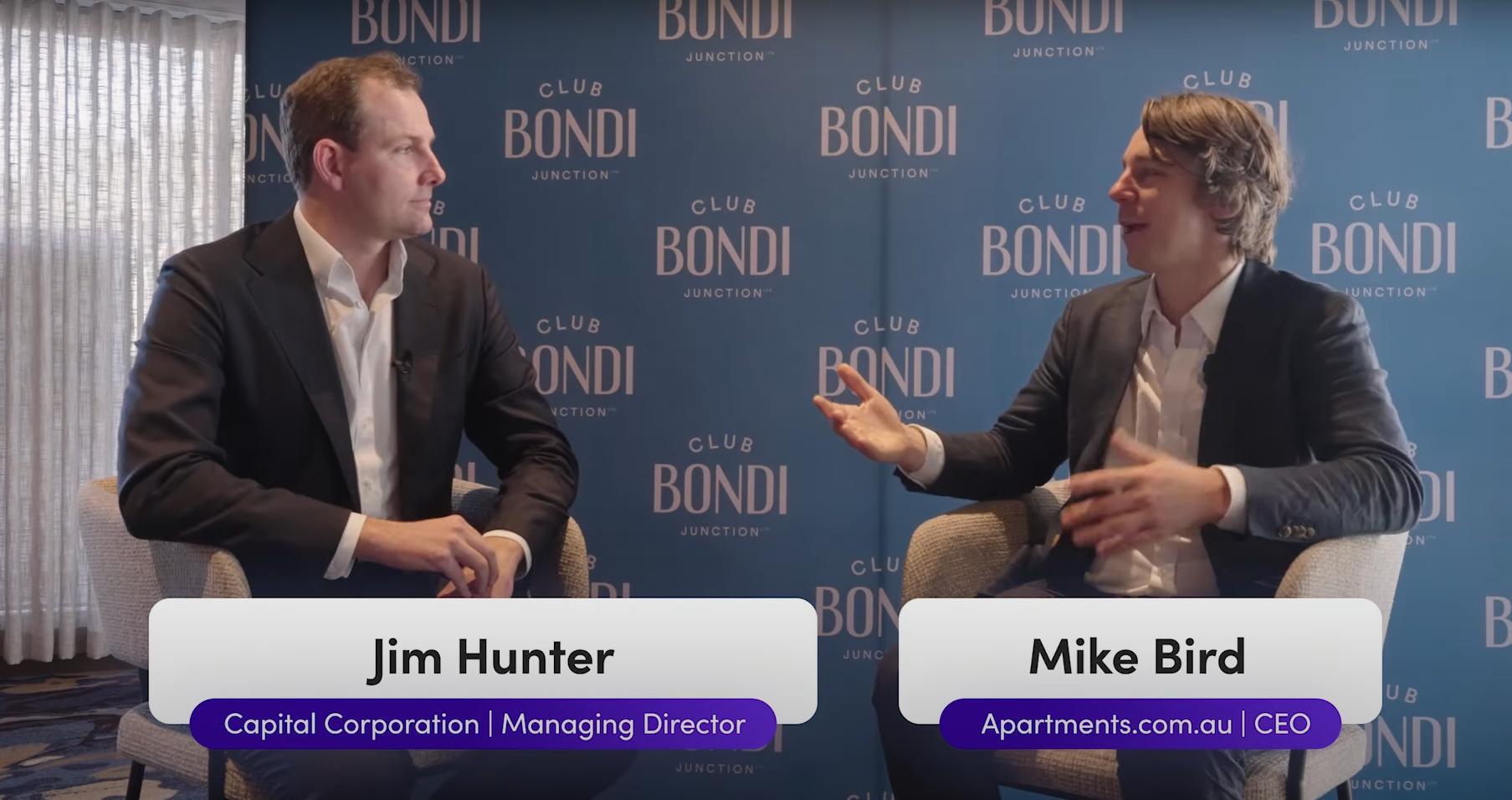
At the Apartments.com.au Market Insights Live Event in Brisbane, two of Queensland's most active project marketers joined Editor in Chief Joel Robinson to talk through what is actually working on the floor right now - and what isn't.
Drew Innes, Director at Slaite Project Marketing, and Fraser Byrne, Director at Keenan & Byrne, between them have close to $3 billion in active Brisbane pipeline. They are both still working the sales floor. The conversation reflects it.
Before the panel, Joel Robinson shared a series of data points from Apartments.com.au's Brisbane activity - and the picture is one of sustained, structurally shifting demand.
Lead volume from Brisbane has grown sharply quarter-on-quarter since early 2024, with the most significant spike from Q3 2025 onwards. That growth has been driven largely by an increase in commercialised projects on the platform - moving from premium models generating 5 to 10 leads per month to listings generating 30 to 40 on average.

Importantly, the demographic mix is changing. First home buyers, who dominated inquiry until late 2024, have dropped off materially as entry price points in Brisbane have moved into the $800,000 to $900,000 range for one-bedrooms. Next home buyers and downsizers are now the dominant cohort.
The bedroom split tells the same story: three-bedroom apartments are accounting for around 40 per cent of inquiries, two-bedrooms around 30 per cent, and one-bedrooms trailing at around 20 per cent - even though they represent the cheapest product in the market.

On supply, the data showed a significant volume of approved projects sitting unsold across Brisbane Inner City, Brisbane South, and Brisbane West - an estimated 30,000 to 35,000 dwellings with approval but not yet launched. That backlog, combined with limited active selling stock, is what is keeping prices moving despite the broader environment.
Median values of properties inquired on through Apartments.com.au have risen sharply. Twelve months ago, one-bedroom entry points were sitting in the $600,000 to $700,000 range. Now the bulk of inquiry sits in the $800,000 to $900,000 range, with a growing share of half-floor and full-floor product being absorbed by downsizers at the top end.
The panel opened with an honest read on where the market sits heading into the second half of 2025.
Both Drew and Fraser were clear: inquiry levels have held up. What has changed is the time it takes to convert that inquiry into a sale.
Fraser Byrne put it plainly:
"Instilling urgency in buyers has definitely slowed. Inquiry hasn't dropped off - we're still getting the lead volumes we've had over the last 12 to 18 months. It's conversions out of displays. It's just slower."
Drew Innes agreed, pointing to broader uncertainty - geopolitical, economic, and budgetary - as the primary driver:
"What buyers are lacking is the certainty to act. I think what's interesting is we've actually experienced buyers that inquired two, three, four months ago doubling back and making a buying decision. And we hope, based on last night's news, we can go back, shake the tree, and see whether we can extract some more sales."
The Federal Budget, delivered the night before the event, was seen by both as a potential positive catalyst - particularly the decision to preserve negative gearing for new builds, which they expected would re-activate some investor inquiry that had been sitting on the fence.

Construction certainty has become the defining concern at the display suite. Buyers - particularly those purchasing off the plan for the first time - want to know that the developer has the track record and the builder relationship to actually deliver.
Fraser Byrne described how this plays out in practice:
"If you're working with a developer with a proven track record and a tier one builder, you're going to lean into that in your marketing - and you're definitely going to lean into it at the display. It's inherently built into our scripts and dialogues. Because if you're selling to somebody that's never bought off the plan before, they don't know what they don't know. You've got to educate them on the whole process from cradle to grave, and then put a spotlight on why the team is so important."
Drew Innes noted the shift in buyer psychology compared to a decade ago, when developer identity was largely irrelevant:
"Back then, we were selling two beds for $500,000 and Sydneysiders would come up here and think it was free. Now if you've got construction underway, you see a peak in interest. We changed the marketing message at Corner House Residence in Stones Corner once we started digging - and the response was immediate."

The "Sydneysiders and Melburnians buying Brisbane" narrative has largely run its course, at least for owner-occupiers. Both panellists described a buyer pool that is now predominantly local - downsizers and right-sizers from within a 15-kilometre radius of the project.
For investor channels, the geographic shift has been equally stark. Fraser Byrne described the inversion:
"Five years ago, 80 per cent of the addresses coming through on channel EOIs were southern states. Now it's the opposite - 80 per cent Queensland addresses, 20 per cent southern states. The market changed so drastically. Melbourne and Sydney investors who were coming here have had to reassess because Brisbane has gotten too expensive for them at the yields on offer."
The investor cohort is not disappearing, but it is relocating. Some Queensland-based channel groups are now directing Melbourne and Sydney buyers to Melbourne product, where price-to-yield ratios are more compelling.
The question of rooftop amenity and body corporate costs generated a nuanced exchange. The premium downsizer - typically spending $4 million to $6 million - is not necessarily drawn to the full resort-style offering. Many are actively seeking buildings with a more restrained amenity package because they want lower strata fees and less body corporate complexity.
Drew Innes was direct about the tension:
"Our market - owner occupiers and downsizers - love the ability to walk to the amenity, but they don't want to pay for it. If it's within the building itself, that's great. But then you're probably appealing to a younger, more transient audience, which means investors, and that's not necessarily a space we like to play in."
Fraser Byrne framed it as a research question that needs to be answered before the product is designed, not after:
"You've got to be well researched and really understand what's going to resonate with who you think the target buyer is. I think for that really premium buyer, one of their key concerns is body corporate. They don't want to buy into a building with all the bells and whistles - just an appropriate level of amenity. Maybe a pool, a sauna, and that's about it."

One of the clearest signals from both panellists was that price escalation and firm pricing are now standard practice in Brisbane - a contrast to Sydney and Melbourne, where discounting, free stamp duty, and reduced deposits have become commonplace tools.
Both Drew and Fraser were unambiguous: the price is the price, it goes up as the project sells down, and buyers who try to negotiate are told to come back when they're ready. The scarcity of good stock, combined with genuine buyer demand, means vendors are not under pressure to deal.
The full Sales & Marketing panel from the Brisbane Market Insights Live Event is available to watch above.
For the full event summary, presentation download and photo gallery from Brisbane, visit: QLD Market Insights Event Summary - May 2026
Join the waitlist for upcoming Market Insights Live Events in Melbourne, Sydney and the Gold Coast:industry.apartments.com.au/updates/market-insight-live-events-join-the-wait-list-2025-26
In partnership with Centuria Bass, Australia Post, Resilience Insurance, Landchecker, Artis, Deposit Power, Women In Property, HubSpot, Spaces by GetParked, and Conversion Assist.

Speak to the team about leveraging the Apartments.com.au audiences and services for your new development.

Greg Billings
Director of Residential Projects

Sonia Fava
Director

Nick Clydsdale
Senior Director

Heath Thompson
Director

Todd Matheson
Director

Thomas Panson
Project Sales & Marketing Agent

Scott Jessop
Head of Sales & Marketing

Alex Adams
Head of Sales & Marketing and
Head of New Business




.jpeg)






.jpg)







-03.png)








.png)

.png)
.png)





_page-0001.jpg)

.png)








.png)



.png)


-01.png)


