By
Michael Bird
February 20, 2026
•
17
min read

.png)
If there was ever any doubt that online shopping has permanently altered the way we live, Australia Post’s latest numbers put it to rest.
Over the recent Christmas peak, Australia Post delivered 111 million parcels nationwide. On 8 December alone, three million parcels moved through the network in a single day. This is not a temporary spike or a pandemic hangover. E-commerce is embedded in everyday life, and its continued growth is quietly reshaping the design, operation and expectations of apartment living.
At our recent VIC Market Insights event in Docklands, Belinda Quinn from Australia Post joined Apartments.com.au’s Mike Bird to discuss what that shift means for developers, operators and residents. The conversation made one thing clear. Parcel management is no longer a minor operational issue. It is core infrastructure.
Anyone who has lived in an apartment building knows the scene. Parcels stacked in a corner of the lobby. Boxes left on the floor near mailboxes. Couriers buzzing multiple apartments or leaving delivery cards after failed attempts.
It is untidy. It is insecure. It undermines the arrival experience of what may otherwise be a carefully designed residential address.
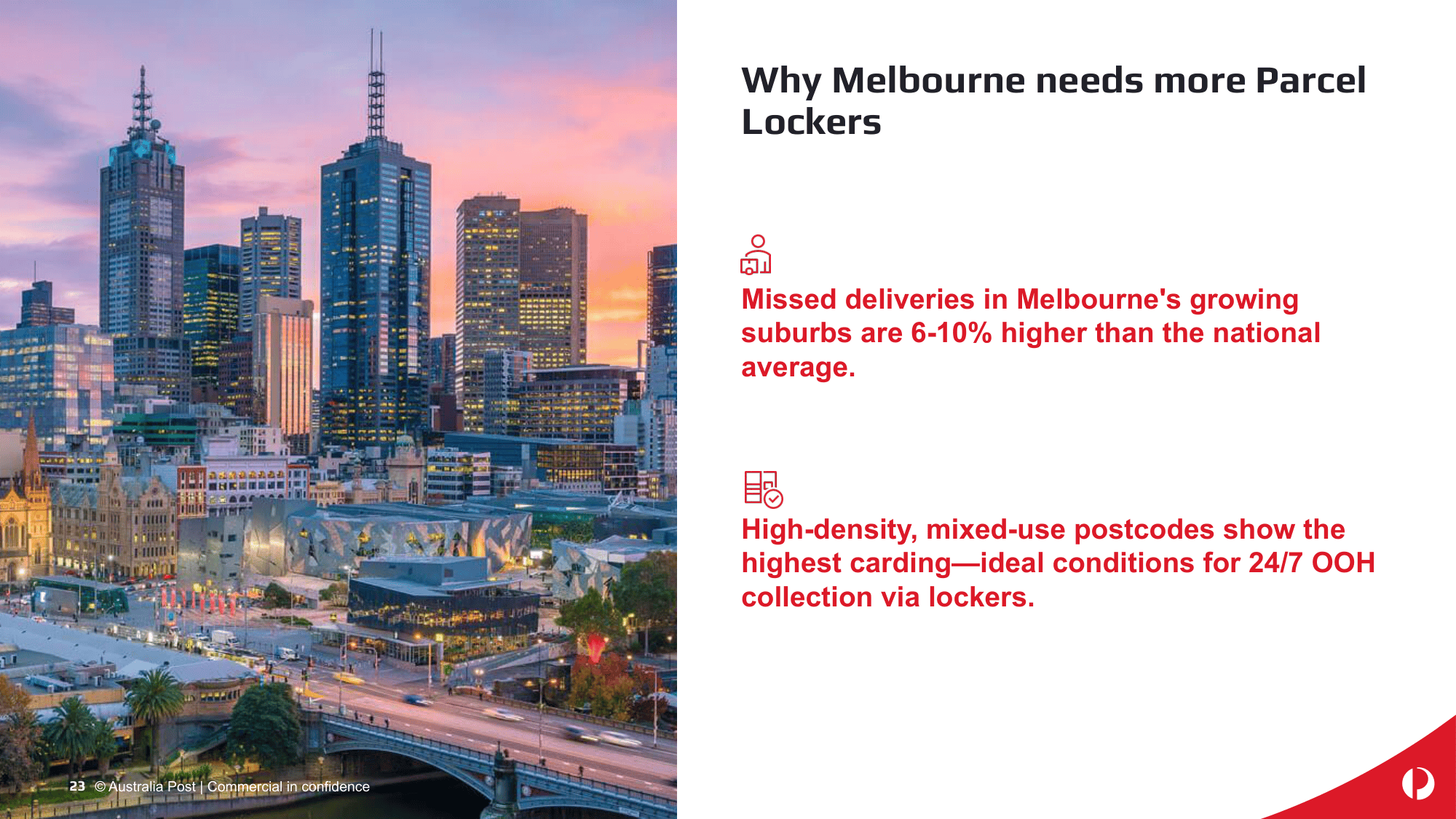
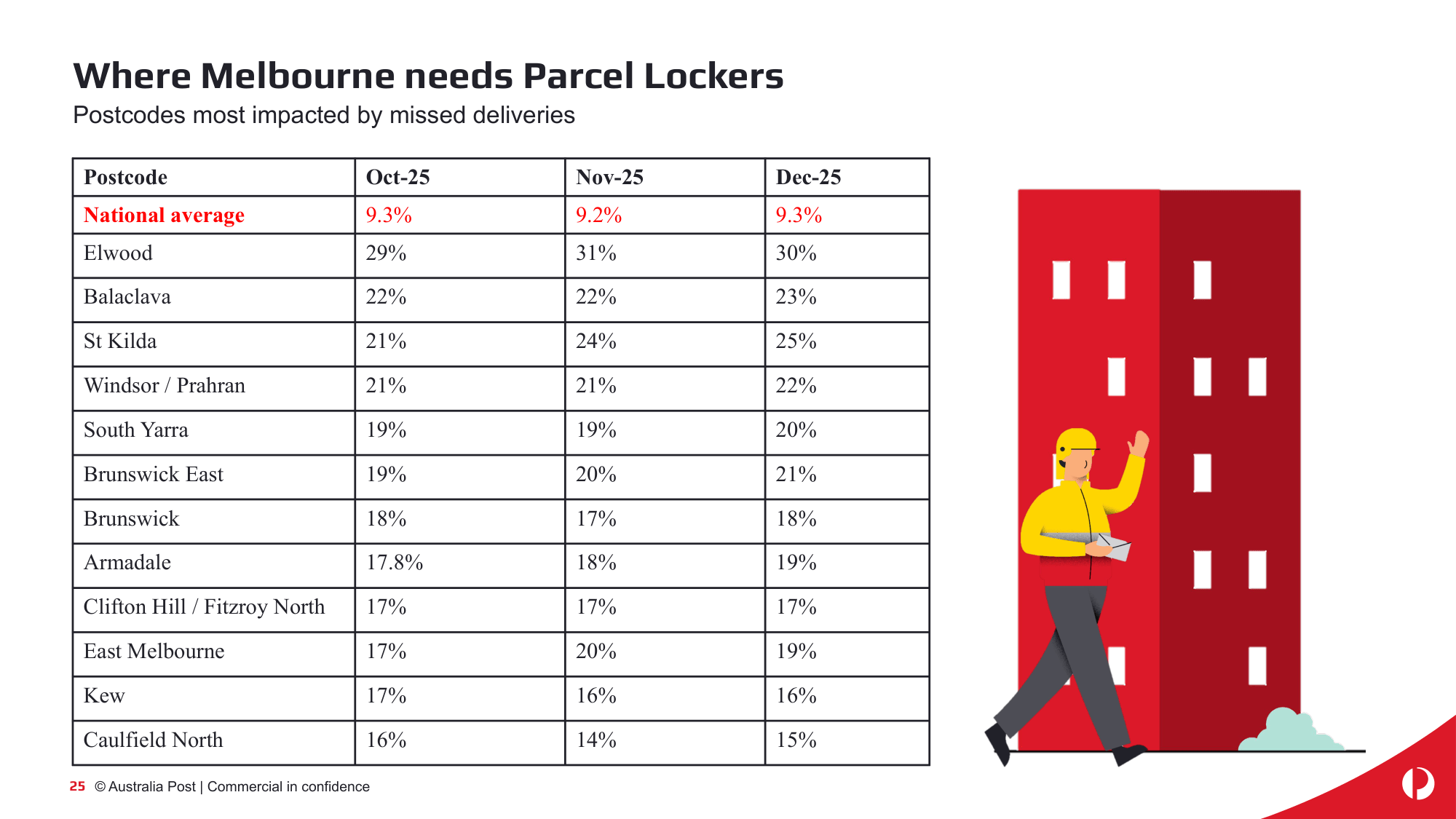
The data behind that frustration is telling. Nationally, around 9 per cent of deliveries are carded, meaning the recipient was not home and must collect the parcel from a post office. In Melbourne, that figure rises to 20 per cent. In high density living, it climbs again to 28 per cent.
In other words, more than one in four deliveries in Melbourne apartment buildings results in a failed first attempt. For residents, that means inconvenience. For building managers, it means congestion, complaints and increased administrative burden.
As apartment living becomes more prevalent across Melbourne, particularly in inner urban and middle ring locations, these friction points only intensify.

The traditional alternatives are far from ideal. Buildings can rely on reception teams to manage deliveries, which introduces ongoing staffing costs and liability concerns. Parcels can be left in common areas, which creates security and aesthetic issues. Or residents are redirected to nearby retail outlets for collection, which shifts the inconvenience rather than solving it.
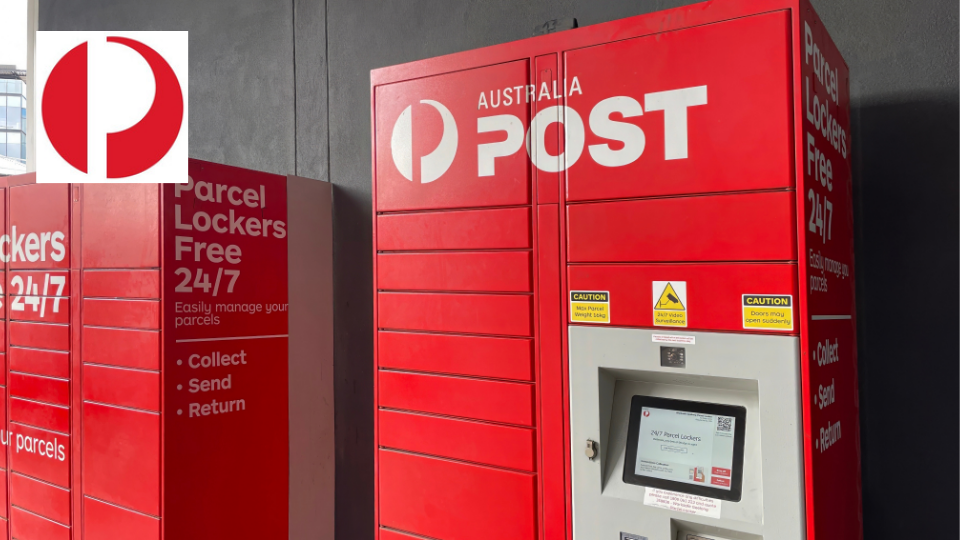
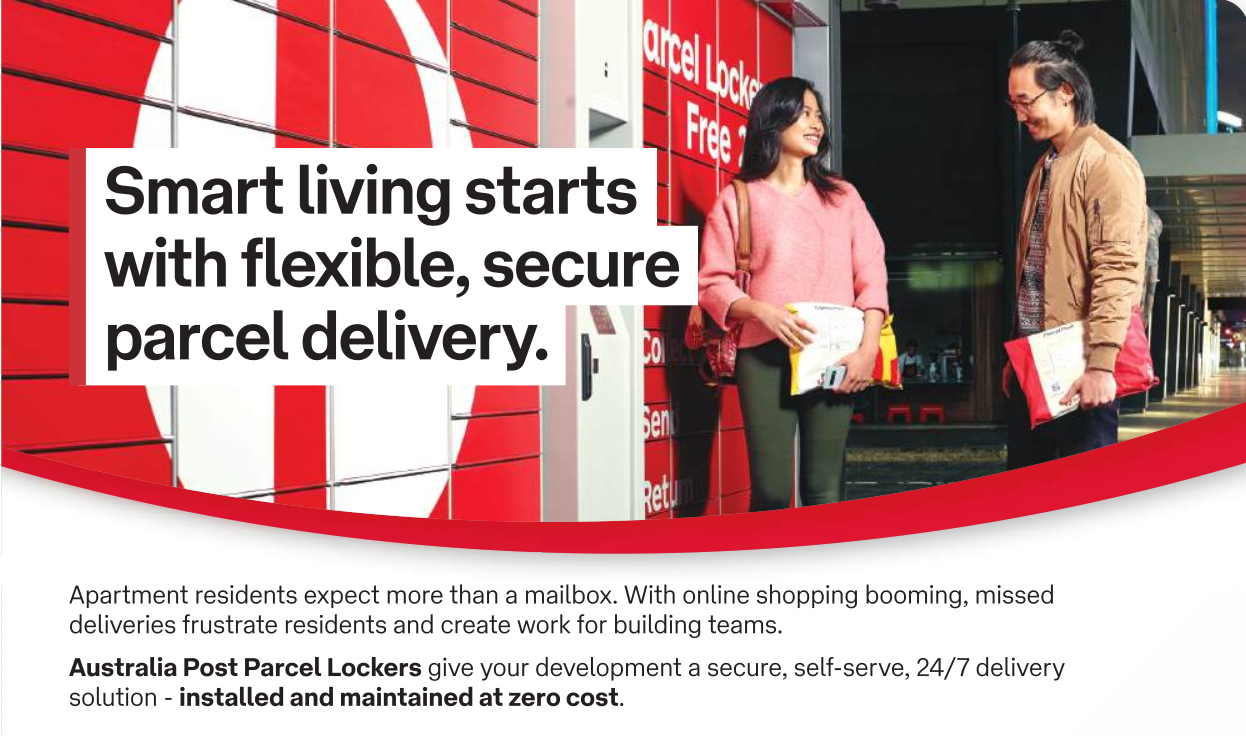
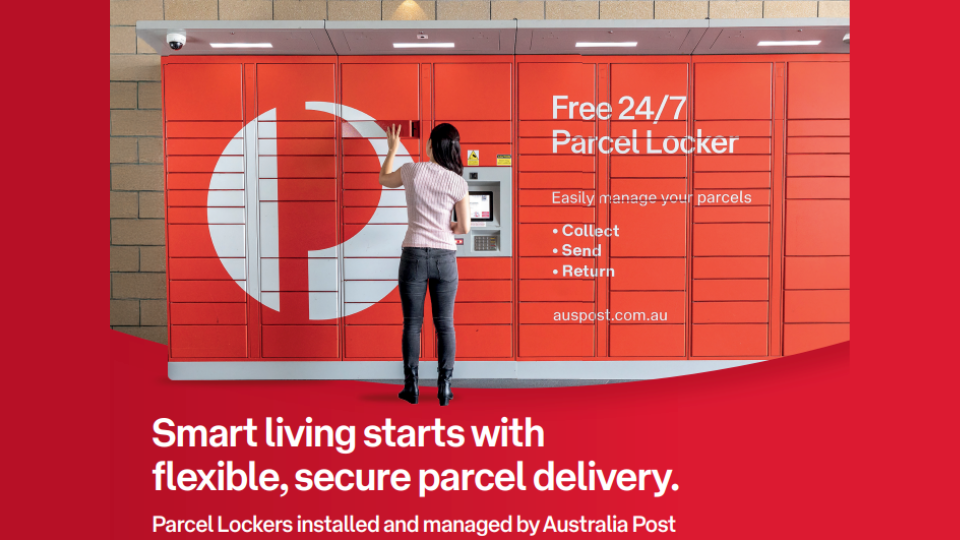
Australia Post’s Parcel Locker network is designed to address that gap by embedding parcel management into the building fabric itself.
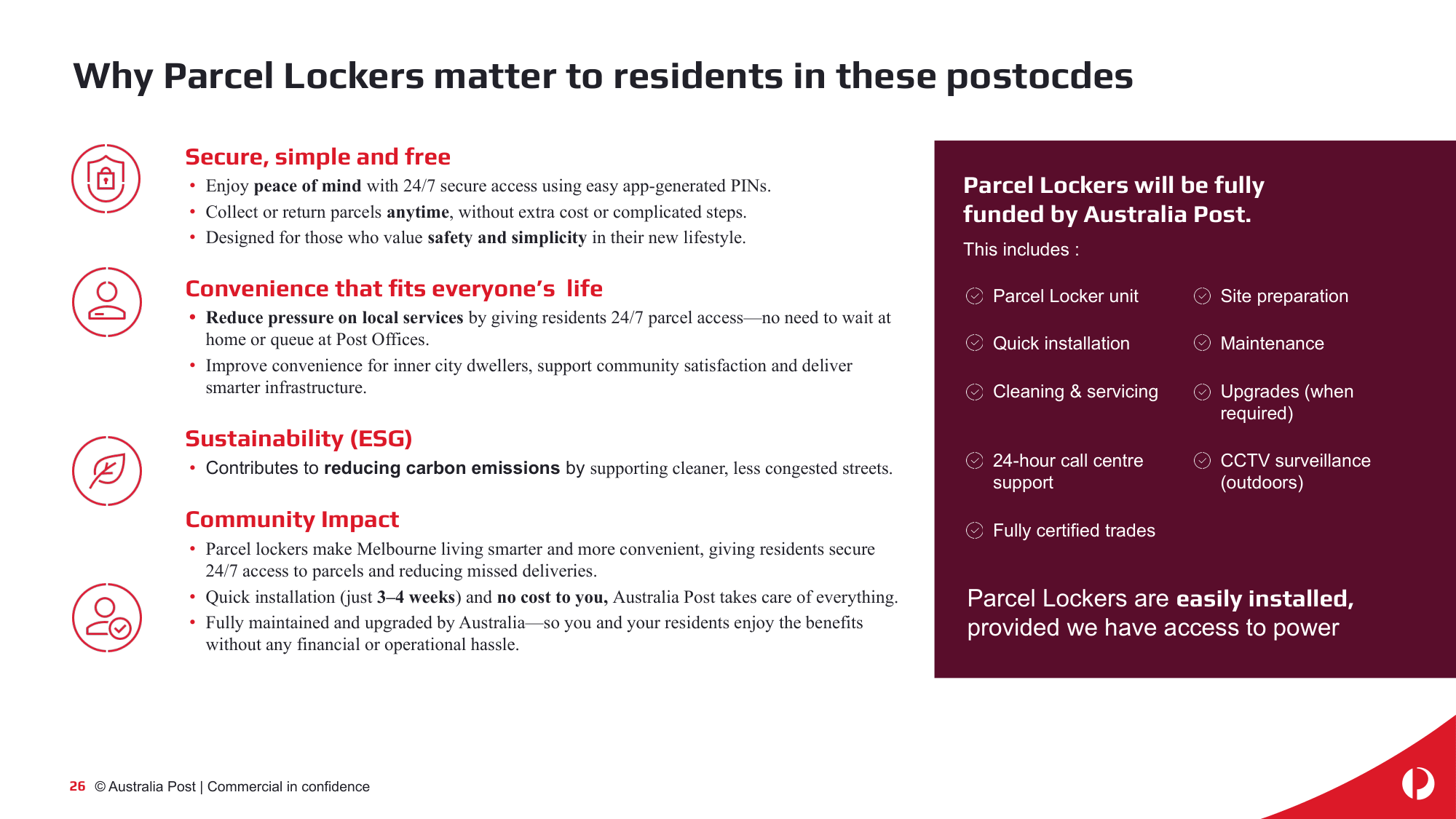
The concept is straightforward. When a parcel arrives, the resident receives a notification. They scan a QR code at the locker and the compartment opens. The parcel is secure, accessible and removed from the lobby floor.
Importantly for developers, the network is free to install and free for residents to use. That removes one of the primary barriers to adoption and shifts the conversation from cost to integration.
While the iconic Australia Post red is widely recognised, lockers can also be delivered in more muted palettes such as beige or green to align with architectural intent. The goal is to integrate seamlessly rather than appear as an afterthought.
As with most building infrastructure, the earlier it is considered, the better the outcome.
Australia Post’s preference is to engage with developers during the design phase. That allows parcel lockers to be located in a considered, publicly accessible space that works for residents and the broader community. It also avoids the compromises often required in retrofit situations.
That public accessibility introduces another dimension. Developers increasingly face ESG reporting requirements and social impact targets. Providing parcel infrastructure that supports both residents and the surrounding neighbourhood can contribute to those social objectives.
Retrofit is possible, and existing buildings can be assessed, but the strongest results occur when lockers are treated as part of the core services plan rather than a bolt on solution.

Melbourne’s elevated failed delivery rates highlight how acute the issue is locally. High density living patterns, secure access buildings and changing work habits all contribute to higher carding rates.
Interestingly, Melbourne is also seeing higher utilisation of parcel lockers than the national average. That suggests strong resident acceptance once the infrastructure is in place.
Internationally, uptake is even more pronounced. Overseas markets are seeing rapid adoption by both developers and consumers, positioning parcel lockers as standard infrastructure in many new residential projects.
For Melbourne’s development community, this signals a shift in baseline expectations. Just as secure bike storage and dedicated parcel rooms have become more common, integrated locker networks may soon be viewed as part of the essential service mix.
At its core, the parcel locker discussion is not about boxes. It is about experience.
Developers invest heavily in lobby design, materials, lighting and landscaping to shape first impressions. Yet a stack of unattended parcels can undo that effort in an instant. Beyond aesthetics, there is the simple matter of convenience. Residents expect frictionless living. A missed delivery that requires a trip to the post office runs counter to that expectation.
The numbers show that e-commerce volumes will continue to grow. As they do, the pressure on building operations will increase. The question for developers is not whether parcels will keep arriving. It is whether buildings are designed to handle them efficiently.
Embedding parcel infrastructure early allows projects to respond to how people actually live today. It supports resident satisfaction, reduces operational strain and aligns with broader community and ESG outcomes.
In a market where differentiation matters, sometimes it is the practical details that have the greatest impact. As our discussion with Belinda Quinn demonstrated, parcel lockers may be a small footprint addition to a building, but they represent a significant shift in how apartment living is supported in an e-commerce era.
.jpeg)
Speak to the team about leveraging the Apartments.com.au audiences and services for your new development.

Greg Billings
Director of Residential Projects

Sonia Fava
Director

Nick Clydsdale
Senior Director

Heath Thompson
Director

Todd Matheson
Director

Thomas Panson
Project Sales & Marketing Agent

Scott Jessop
Head of Sales & Marketing

Alex Adams
Head of Sales & Marketing and
Head of New Business
















.jpg)





.png)





-03.png)








.png)


.png)








_page-0001.jpg)

.png)











.png)



.png)


-01.png)


