By
Michael Bird
February 20, 2026
•
31
min read

In a market where feasibility margins are thin and buyers are highly discerning, site selection has become more critical than ever.
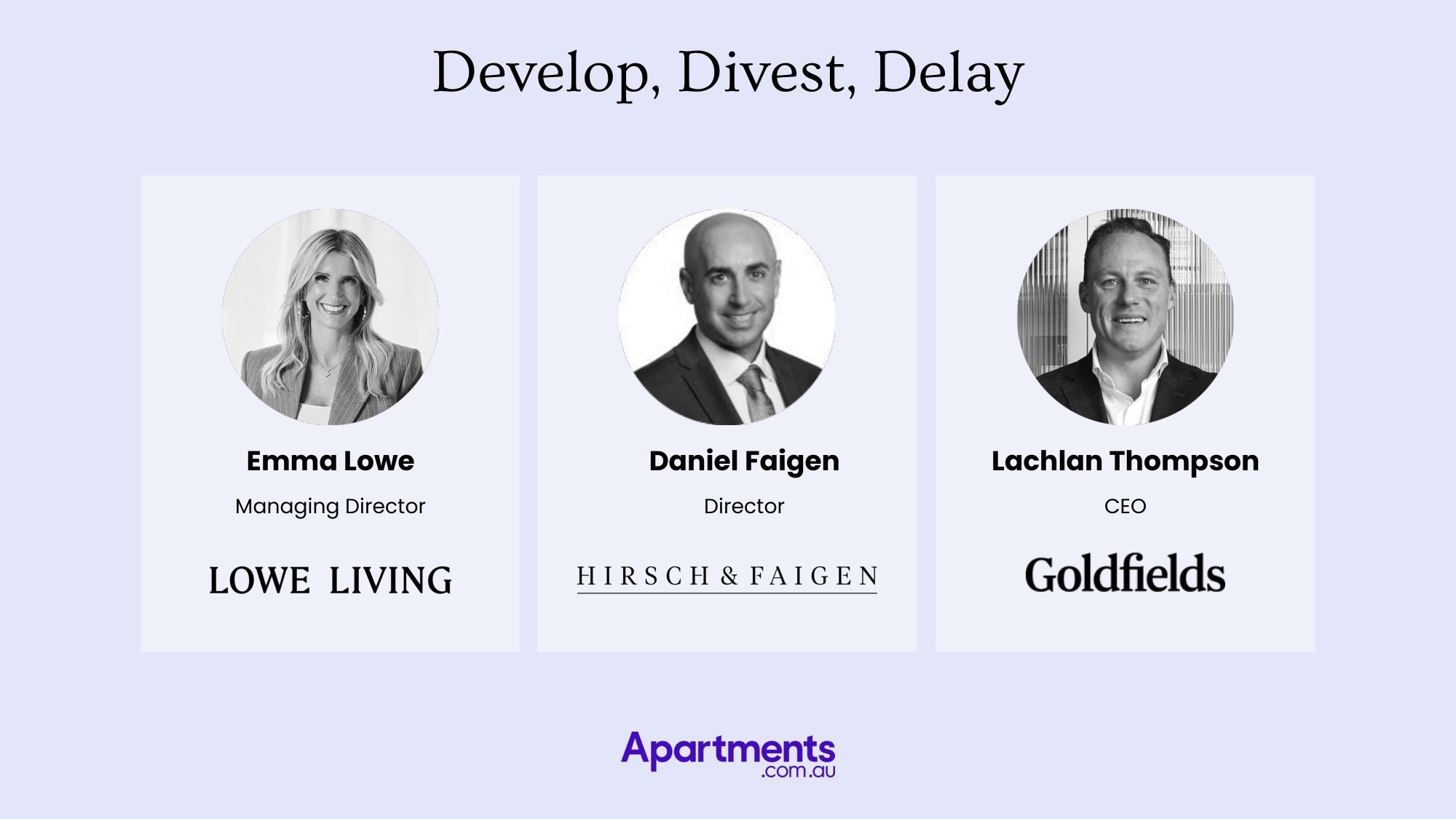
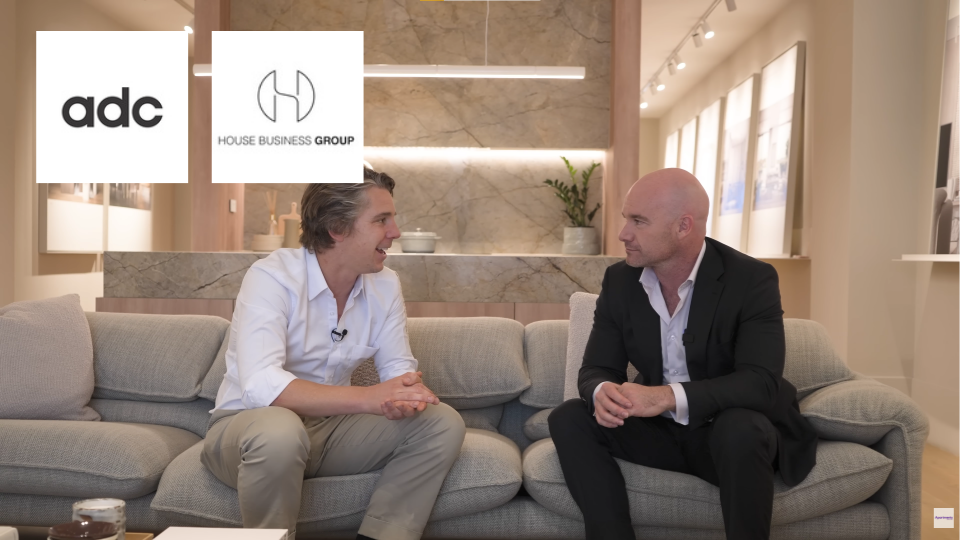
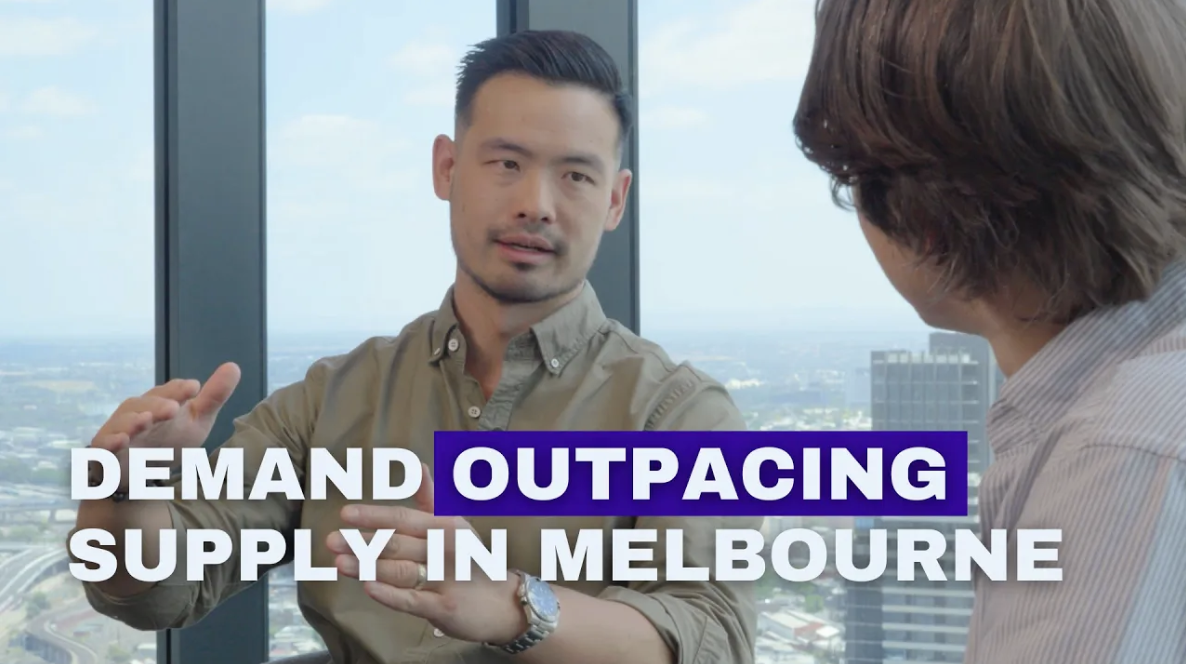
At our recent VIC Market Insights event, I sat down with Emma Lowe, Co-Founder and Managing Director of Lowe Living, Daniel Faigen of Hirsch & Faigen, and Lachlan Thompson, CEO of Goldfields Group, to pressure test several live Melbourne development sites.
The exercise was simple. Would you develop, delay or divest?
The answers revealed a great deal about where the market sits in 2026 and what it now takes to bring a project to life.
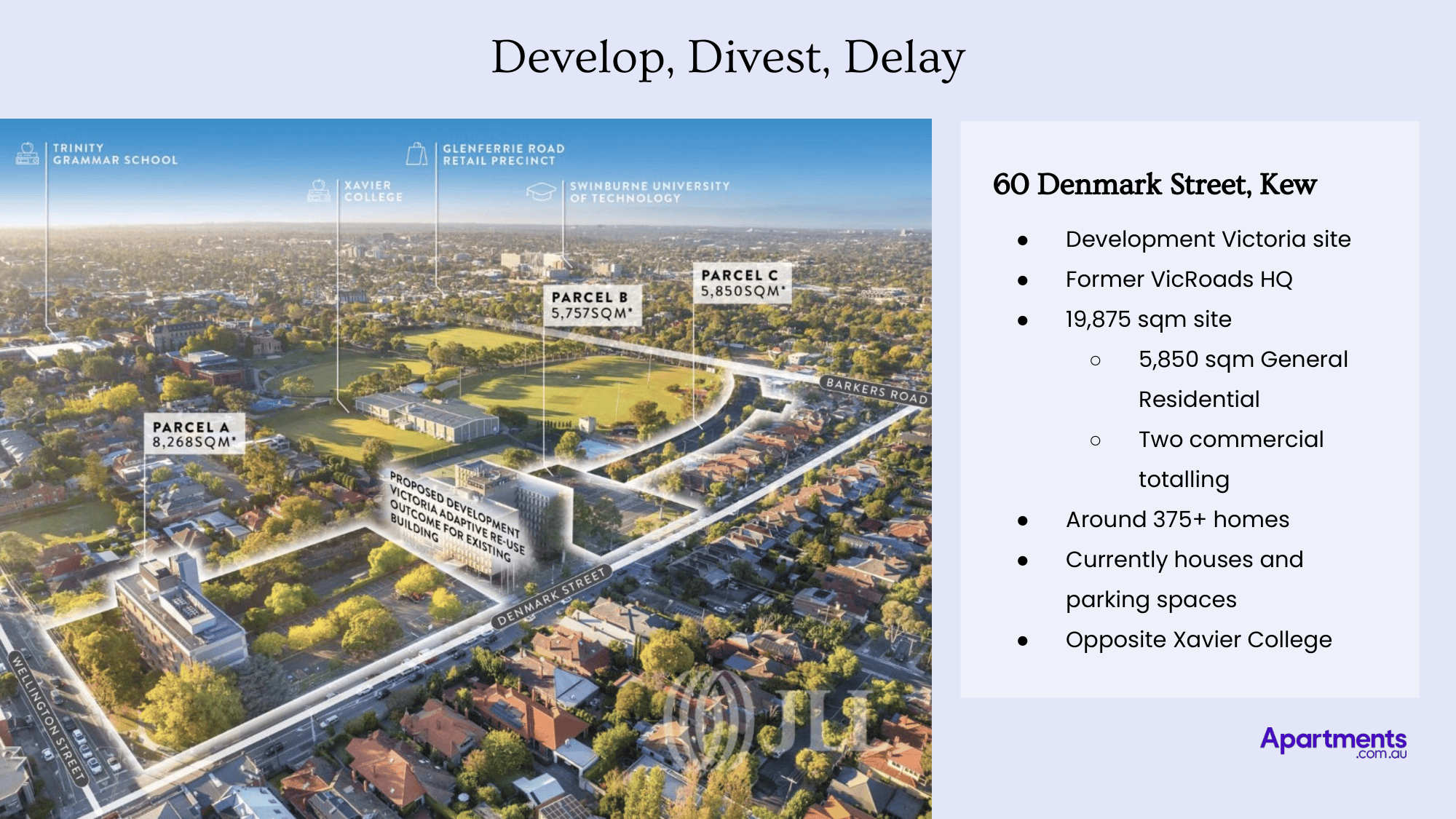
When discussing large infill opportunities such as the former VicRoads site in Kew, the immediate tension was scale.
For boutique luxury operators like Lowe Living, the location ticked demographic boxes, but the size pushed it beyond their owner occupier sweet spot. For larger groups, the capital intensity and staging risk became central considerations.
The broader point was clear. In this cycle, entry level and necessity driven product has deeper liquidity than aspirational mid market stock. However, on premium sites, particularly in established blue chip suburbs, price must still catch construction cost.
As Daniel Faigen noted, if one and two bedroom apartments can be held below certain price thresholds, particularly sub $1.2 million, velocity improves materially. Once product pushes beyond $1.5 million, the buyer pool narrows quickly.
The challenge for larger sites is finding the right blend. Enough volume stock to achieve presales and channel engagement, without diluting premium product positioned for downsizers and owner occupiers.
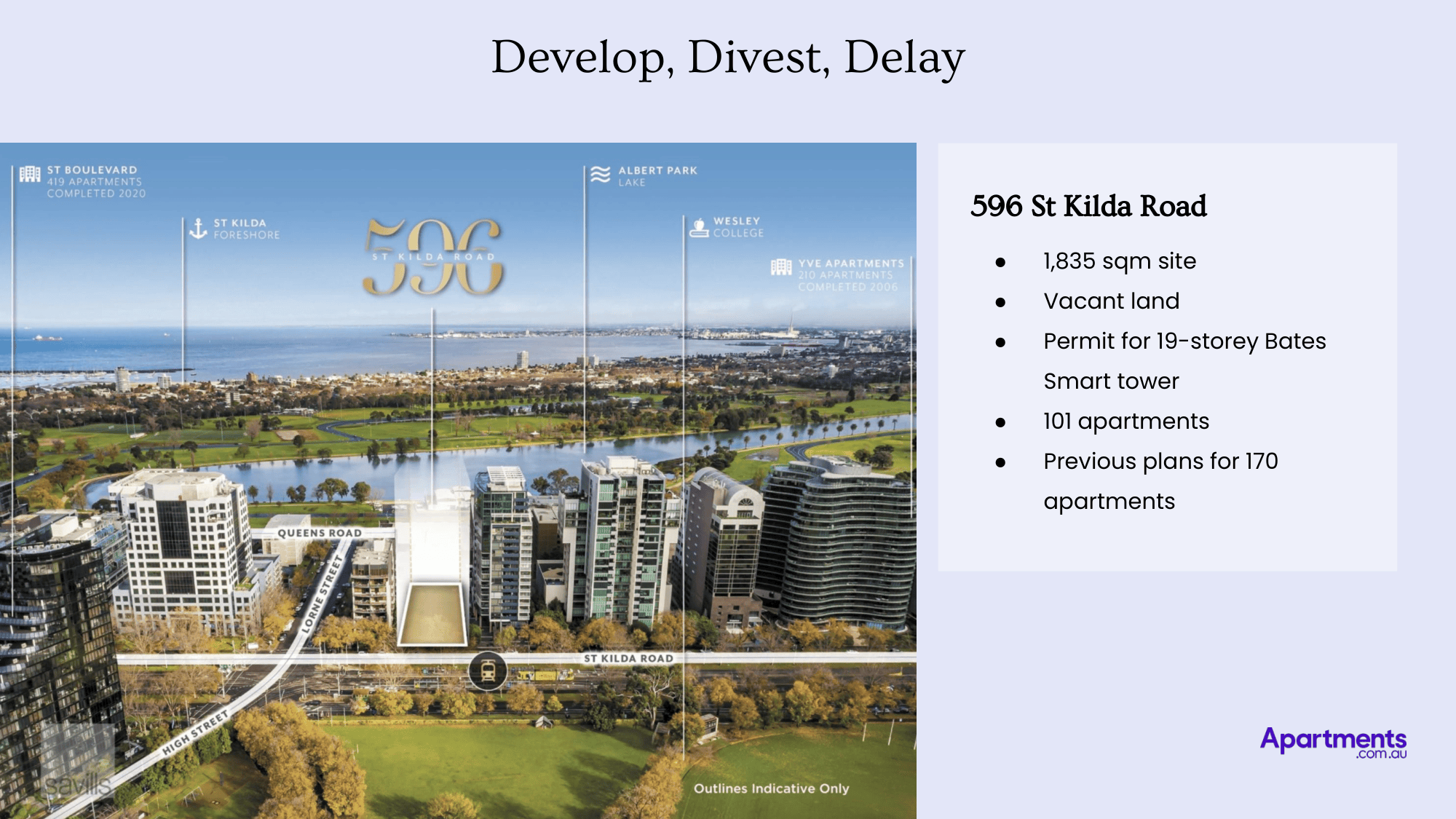
On more compromised inner urban sites such as parts of St Kilda Road, the panel’s feedback sharpened.
In a buyer’s market, you cannot rely on a handful of penthouses with strong views to carry an entire scheme. The majority of apartments must have genuine saleability.
For Lowe Living, outlook and geometry are decisive. It is not enough to have proximity to parkland or the bay if a significant proportion of apartments face neighbouring buildings or risk future view loss. In the current environment, purchasers expect 10 out of 10, not nine out of 10.
Developers who are succeeding in more challenged precincts are doing so by controlling risk. Starting construction at launch, partnering with reputable builders and leveraging established brand narratives all contribute to confidence. In an off the plan market, delivery certainty is often as important as location.
Interestingly, several sites prompted discussion about alternative use.
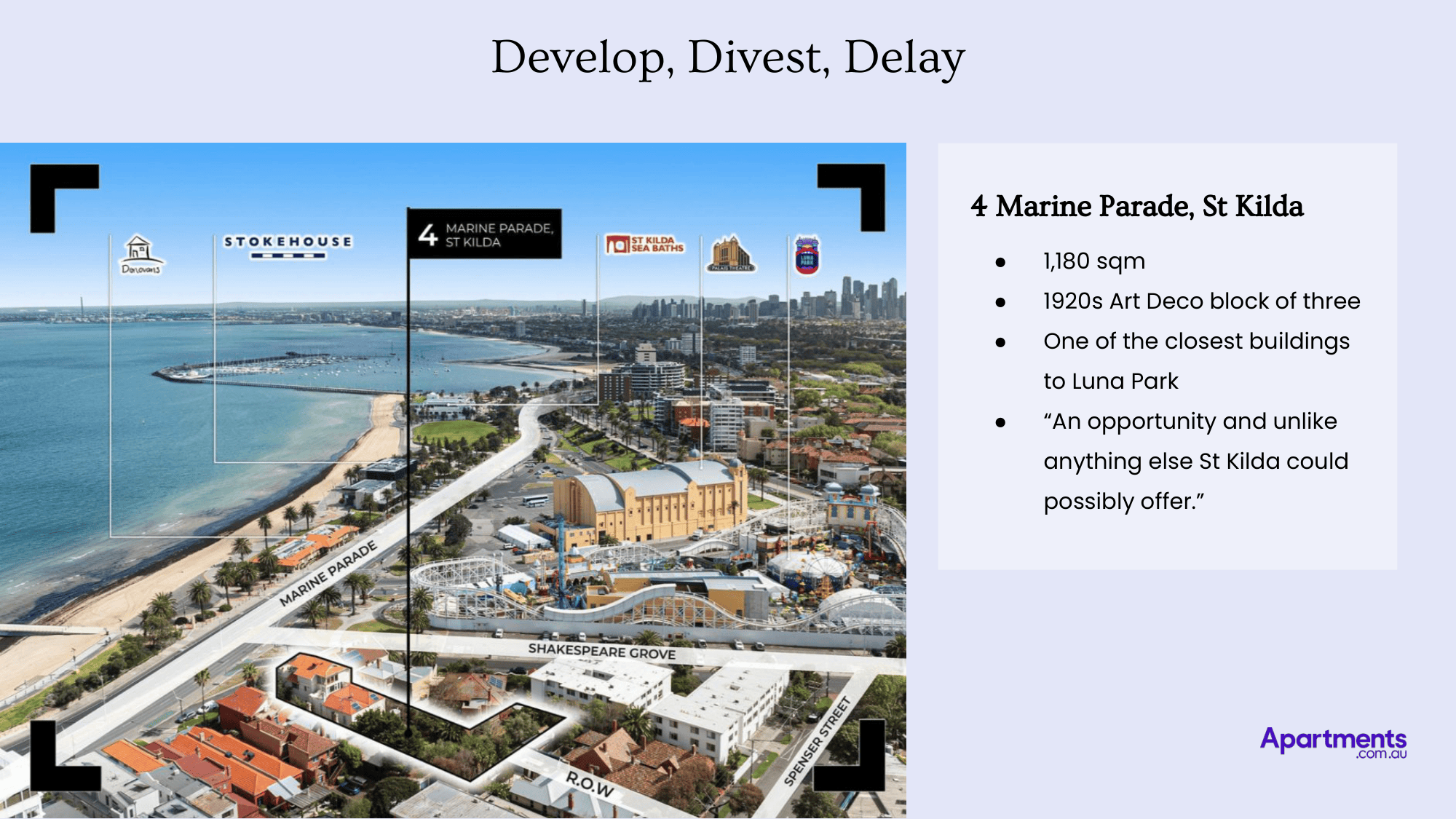
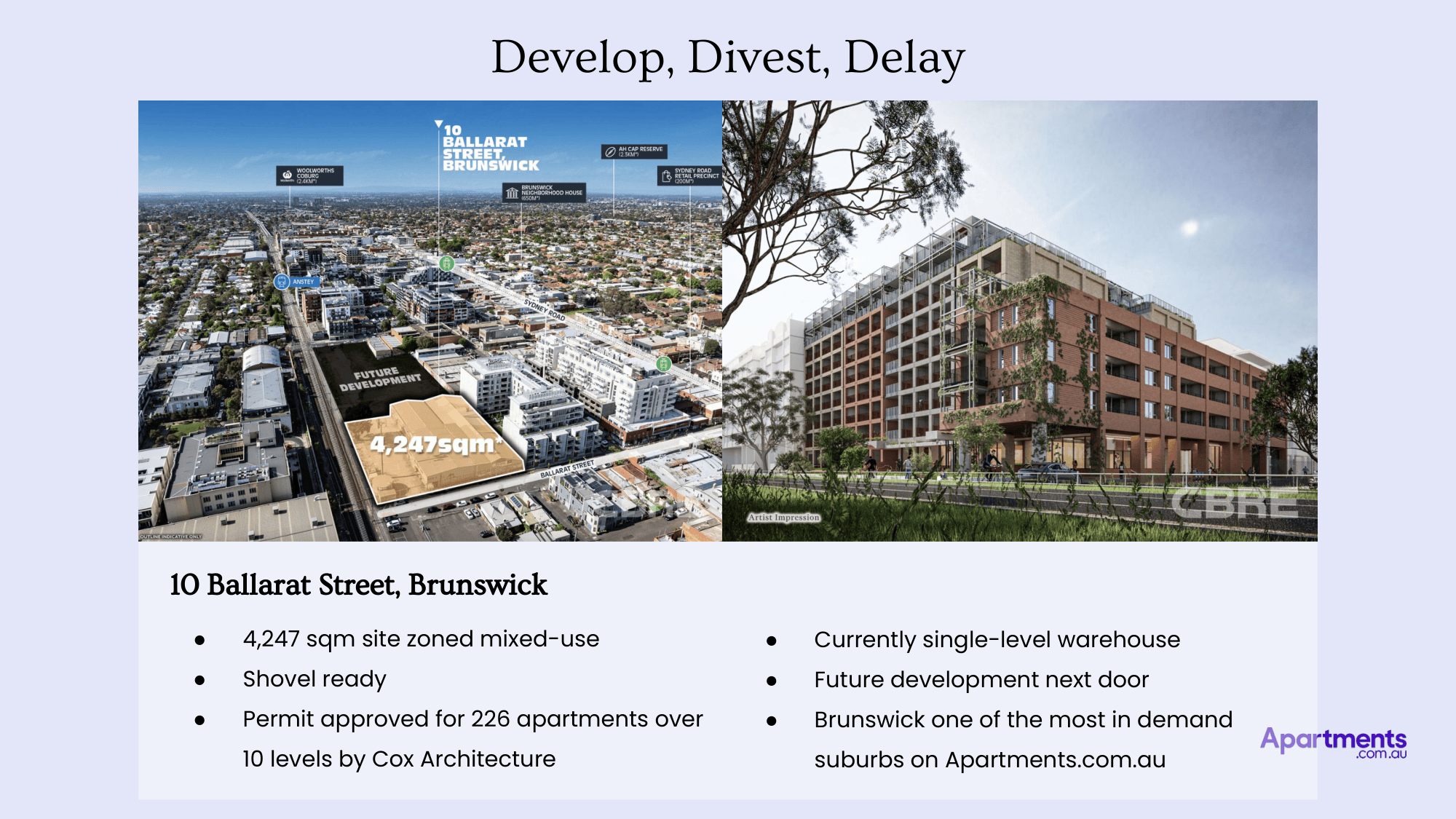
On St Kilda beachfront, a battle axe site with planning constraints sparked debate around boutique hotel or serviced apartment potential. In Brunswick, build to rent emerged as a more logical model than build to sell, particularly where scale and proximity to transport suited long term rental demand.
The underlying theme was flexibility. Developers are increasingly interrogating whether residential is truly the highest and best use, or whether mixed use, hotel or last mile logistics could unlock value in ways traditional apartment models cannot.
In a tighter market, optionality is an asset.
Despite the disciplined tone of site assessment, there was a noticeable lift in sentiment.
All three panellists described a strong start to 2026, with due diligence pipelines reactivating and feasibilities beginning to show some redundancy for the first time in years.
The past three to four years have tested development fundamentals. Construction costs surged. Financing costs rose. Planning delays stretched programs. Revenue, in many cases, remained flat.
That compression forced conservatism.
Now, there are early signs of adjustment. Entry level product continues to move. Interstate buyers see relative value in Melbourne compared to Queensland and Sydney. Ministerial planning pathways are offering greater certainty for some projects, allowing developers to advance design and marketing with clearer timelines.
The mood is not euphoric, but it is more constructive.
Perhaps the most consistent message from the panel was the importance of focus.
Goldfields is leaning into the crossover between sectors, using its multidisciplinary exposure to inform better decisions across build to rent, master planned communities and mixed use assets.
Hirsch & Faigen is doubling down on disciplined site acquisition, early construction commencement and strong channel relationships to drive presales.
Lowe Living remains committed to vertically integrated luxury product, controlling design, construction and sales to maintain brand integrity. Its upcoming Brighton and Camberwell projects exemplify that strategy, combining premium locations with distinctive amenity such as private spa and wellness facilities to create scarcity and differentiation.
None of the panellists spoke about radically changing their product offering. Instead, they emphasised doing what they do best, but doing it with sharper underwriting and greater selectivity.
Across all sites discussed, brand and narrative emerged as critical.
Projects backed by established developers with visible track records are finding traction, even in cautious markets. Buyers are asking more questions, taking longer to transact and demanding greater transparency.
In that context, the developer’s story matters. Builder reputation matters. Delivery history matters.
Marketing alone cannot rescue a compromised site. But when product, pricing and positioning align, clear storytelling can accelerate momentum.
If there is a defining characteristic of the current market, it is discipline.
Sites must be genuinely unique or genuinely well priced. Product must match demographic depth. Every apartment must have a reason to exist.
The era of assuming broad market uplift will solve marginal feasibility has passed, at least for now.
Yet beneath that discipline sits cautious optimism. Interstate capital is circling. Quality projects are selling. Planning certainty is improving in pockets. And developers with clear identity and conviction are moving again.
In a selective market, the winners will be those who pick the right site, for the right buyer, at the right price, and then execute without compromise.
.jpeg)
Speak to the team about leveraging the Apartments.com.au audiences and services for your new development.

Greg Billings
Director of Residential Projects

Sonia Fava
Director

Nick Clydsdale
Senior Director

Heath Thompson
Director

Todd Matheson
Director

Thomas Panson
Project Sales & Marketing Agent

Scott Jessop
Head of Sales & Marketing

Alex Adams
Head of Sales & Marketing and
Head of New Business













.jpg)



.png)





-03.png)








.png)
.png)
.png)





_page-0001.jpg)
.png)






.png)




.png)


-01.png)


