By
Joel Robinson
July 15, 2025
•
2
min read

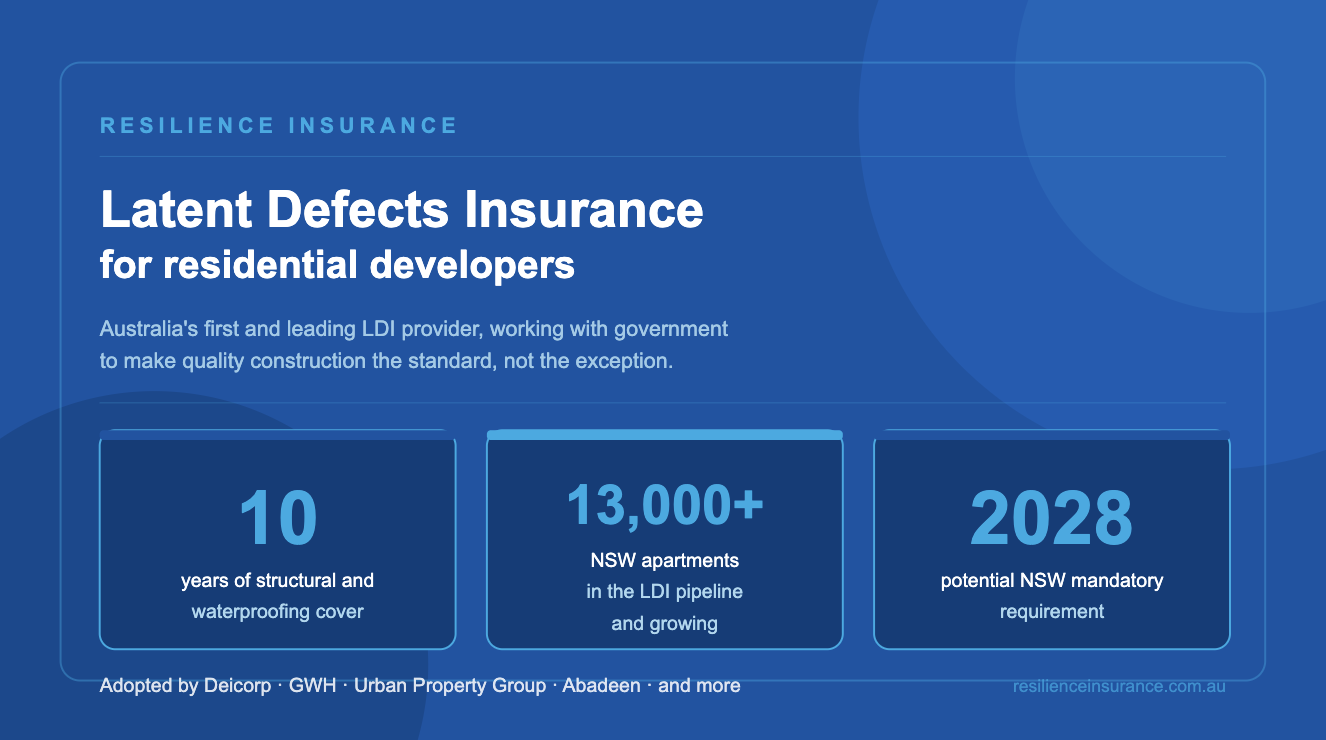
For residential developers, risk does not end at completion. In fact, some of the most financially and reputationally damaging issues can emerge years after the final apartment is sold and settled.
Latent building defects—those hidden issues that only become apparent over time—have become one of the most significant long-term risks facing developers in Australia’s residential sector. In response, a growing number of developers are turning to Latent Defects Insurance (LDI) as a strategic risk-management tool rather than a simple insurance product.
Traditionally, developers relied on contractual protections, statutory warranties, and builder responsibilities to manage post-completion risk. However, market realities have changed.
Builders may cease trading, subcontractors may disappear, and defects can emerge well outside standard warranty periods. Even when liability is clear, resolving disputes through litigation is costly and often damages all parties involved.
For developers, these issues can resurface long after a project is completed—impacting brand reputation, future approvals, and relationships with financiers and buyers.
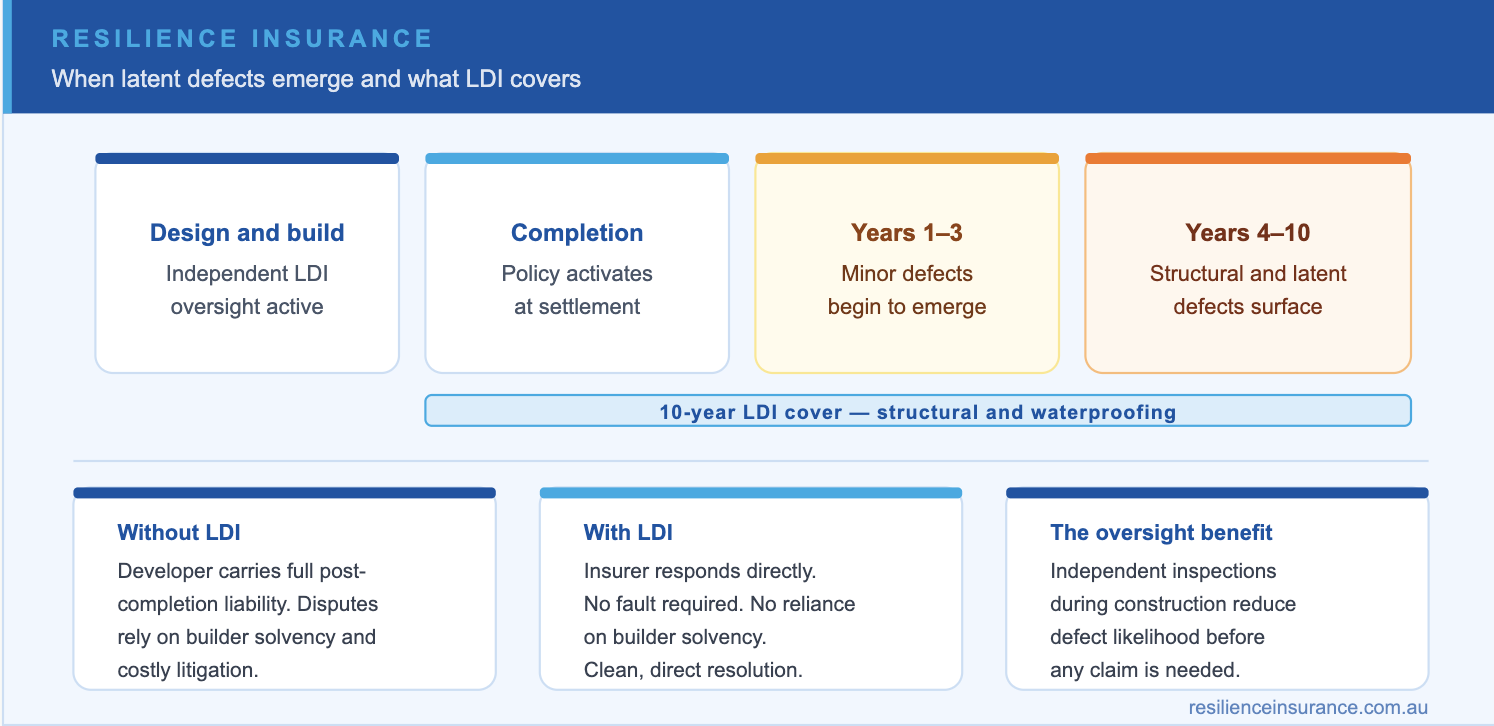
Latent Defects Insurance provides developers with long-term cover for major structural and building envelope defects, typically extending up to a decade post-completion. Crucially, the policy responds regardless of the ongoing solvency of the builder or other parties involved in construction.
This means developers can be confident that serious defects will be addressed without prolonged disputes or reliance on complex legal processes.
However, the value of LDI extends beyond claims protection.
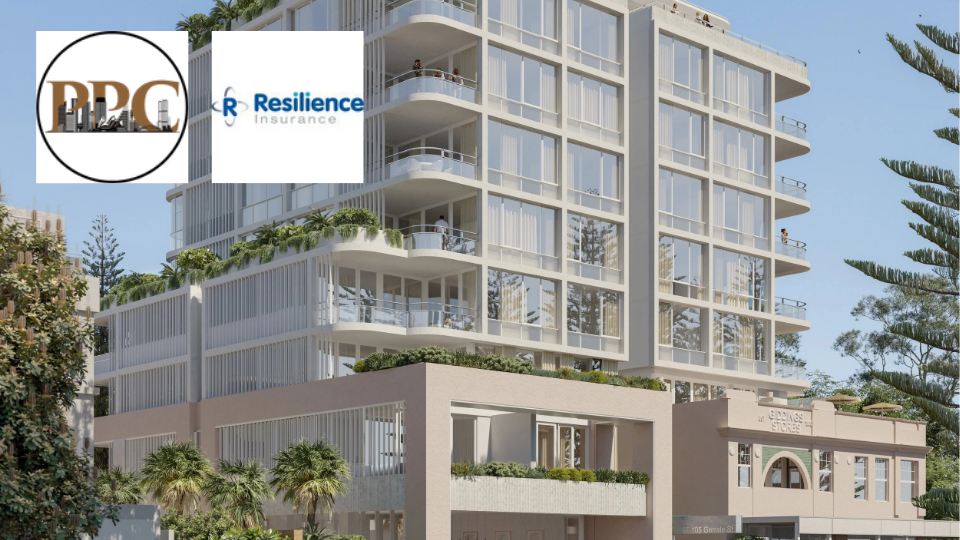
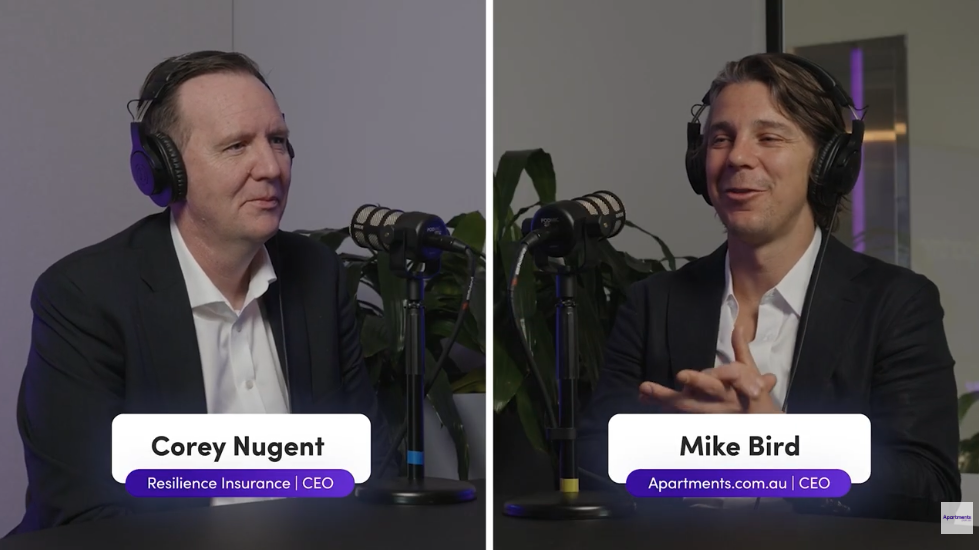
Insurers such as Resilience Insurance do not simply assess risk at the end of construction. Their involvement begins early, with independent technical reviews of design documentation, construction methodology, and contractor capability.
Throughout the build, staged inspections and quality controls help ensure that issues are identified and corrected before they become embedded in the structure. This proactive oversight reduces the likelihood of defects while reinforcing accountability across the project team.
For developers, this additional layer of scrutiny can significantly improve construction outcomes without undermining project timelines.
In an era of heightened scrutiny, a developer’s track record matters more than ever. Defect disputes can attract negative media attention, strain relationships with owners corporations, and complicate approvals for future developments.
By incorporating LDI into a project, developers signal a commitment to long-term quality and accountability. This can strengthen brand positioning and differentiate projects in a crowded market, particularly for off-the-plan buyers who are increasingly risk-aware.
LDI also provides reassurance to joint venture partners and investors who are sensitive to post-completion liabilities.
From a commercial perspective, latent defects insurance can help stabilise long-term risk profiles. Developers may find that financiers view LDI favourably, particularly on larger or more complex residential projects where defect exposure is higher.
While LDI represents an upfront cost, it can reduce the likelihood of unplanned future expenses, legal disputes, and capital provisions for defect rectification. Over the life of a project—and across a developer’s broader portfolio—this predictability can be a significant advantage.
The growing adoption of LDI reflects a broader shift in how developers approach risk. Rather than viewing defects as an unavoidable post-handover problem, developers are increasingly embedding quality assurance into the construction process itself.
This aligns with industry-wide efforts to lift building standards and restore confidence in residential development.
As regulatory expectations rise and buyers become more discerning, developers who proactively manage long-term risk will be better positioned to succeed. Latent Defects Insurance is rapidly becoming a key part of that strategy—not as a last resort, but as a foundation for better-built, more resilient residential projects.

Speak to the team about leveraging the Apartments.com.au audiences and services for your new development.

Greg Billings
Director of Residential Projects

Sonia Fava
Director

Nick Clydsdale
Senior Director

Heath Thompson
Director

Todd Matheson
Director

Thomas Panson
Project Sales & Marketing Agent

Scott Jessop
Head of Sales & Marketing

Alex Adams
Head of Sales & Marketing and
Head of New Business







.jpeg)




.jpg)






.png)





-03.png)









.png)

.png)

.png)








_page-0001.jpg)

.png)











.png)



.png)


-01.png)


