By
Joel Robinson
•
3
min read

Securing funding for construction projects is becoming more and more challenging. As financiers face mounting pressure to minimise risk, they are scrutinising projects more carefully than ever. Developers need to demonstrate not only the viability of their projects but also their commitment to quality and risk mitigation. This is where Resilience LDI enters the picture, not just as a safeguard but as a competitive advantage in securing financing.
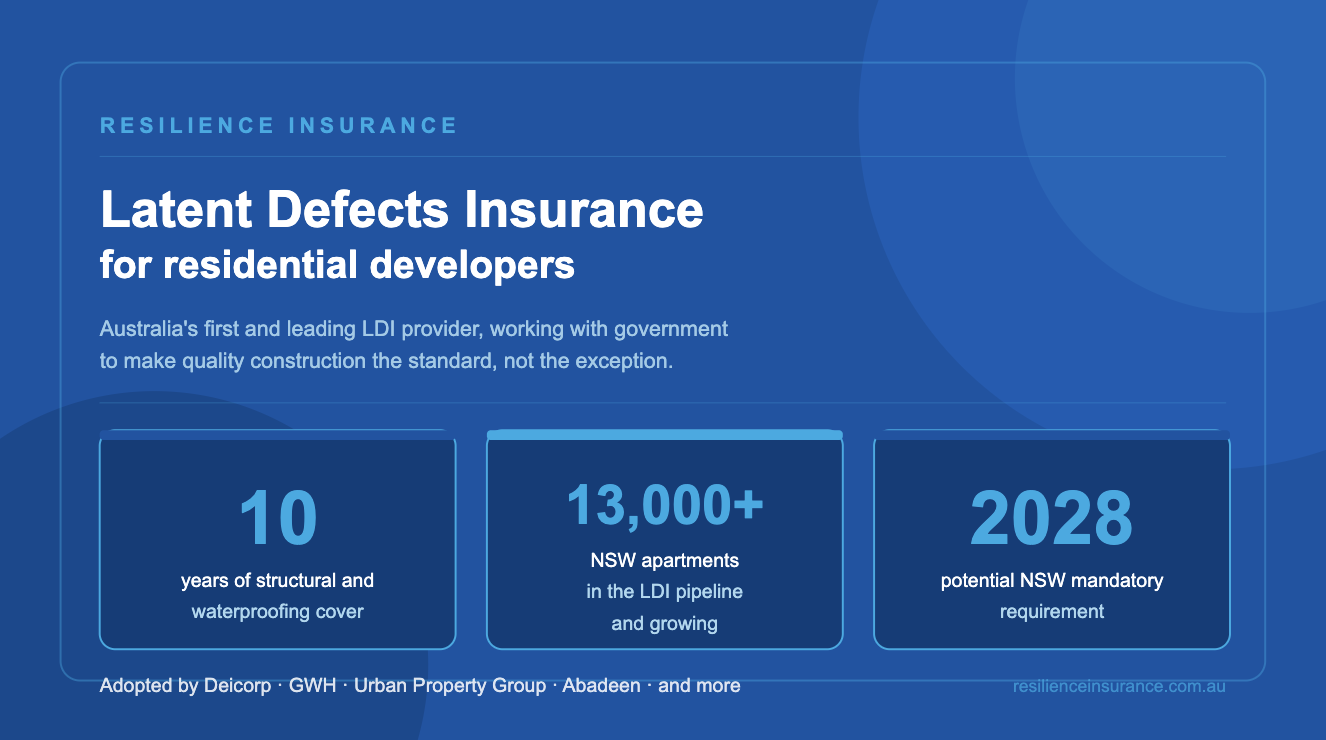
In established global markets like the UK and France, LDI has become a standard requirement for project funding. Its ability to mitigate long-term risks and provide financial stability has made it indispensable for developers and financiers alike. For Australian developers looking to stay ahead, adopting Resilience LDI isn’t just a protective measure, it’s a strategic move to unlock funding opportunities and build trust with financial institutions.
Financiers are becoming increasingly cautious about where they place their capital, especially in construction, where unforeseen issues can jeopardise returns. Latent defects, hidden structural flaws and waterproofing failures that surface after project completion, pose one of the greatest risks. These defects can lead to costly repairs, delays, legal disputes and even insolvency.
For financiers, these risks are deal breakers! They need assurance that their investment is secure, not just during the construction phase but for years after the project’s completion. Traditional guarantees and warranties fall short, as they often require legal action to recover costs, creating delays and uncertainty. This gap is where Resilience LDI provides a compelling solution.
1. Reducing Risk for Financiers
Resilience LDI provides financiers with a direct safety net, covering the costs of latent defects without requiring lengthy disputes over liability. This assurance gives financiers the confidence to back projects, knowing their investment is protected against unforeseen issues.
2. Increasing Developer Credibility
For developers, securing funding often hinges on building trust with financiers. Projects with Resilience LDI demonstrate a proactive approach to risk management and quality assurance, signalling to financiers that the developer is committed to protecting their investment.
3. Accelerating Approvals
Funding applications often stall due to concerns about long-term project risks. Resilience LDI addresses these concerns head-on, providing a clear pathway to mitigate potential issues. This can streamline the approval process, allowing developers to move forward faster.
4. Aligning with Global Standards
In markets like the UK, LDI is a standard requirement for residential developments, reflecting its value in protecting investments. Australian developers who adopt Resilience LDI align themselves with these global best practices, making their projects more attractive to international investors and financiers.
In countries like France, decennial liability insurance (a form of LDI) has been mandatory for decades. This requirement has created a safer, more predictable environment for financiers, developers and buyers alike. By eliminating the financial uncertainty of latent defects, these markets have fostered greater trust and collaboration across the construction ecosystem.
In the UK, LDI has become a key tool for maintaining investor confidence in large-scale residential projects. Funders often refuse to finance developments without LDI, viewing it as an essential safeguard. This precedent highlights the role of LDI not just as an insurance product but as a cornerstone of sustainable development financing.
For Australian developers, the adoption of Resilience LDI offers a way to stand out in an increasingly competitive funding landscape. By integrating Resilience LDI into their projects, developers can:
- Mitigate long-term risks, providing financiers with the confidence to invest.
- Demonstrate a commitment to quality and accountability.
- Align with international best practices, opening doors to global funding opportunities.
- Streamline the funding process by addressing financiers’ top concerns.
In a market where trust and reliability are paramount, Resilience LDI provides a tangible way to differentiate your project and secure the backing you need.
Financiers also stand to benefit by advocating for Resilience LDI in the projects they fund. By making Resilience LDI a standard requirement, financiers can reduce their exposure to risk, protect their returns and foster stronger partnerships with developers. This approach not only safeguards individual investments but also contributes to a more stable and trustworthy construction industry.
The challenges of securing funding are not going away, but the solutions are becoming clearer. Resilience LDI represents a critical step forward for developers and financiers alike. By mitigating long-term risks, enhancing trust and aligning with global standards, Resilience LDI is poised to become a cornerstone of the Australian construction funding landscape.
For developers, adopting Resilience LDI isn’t just about risk management - it’s about creating opportunities. For financiers, it’s about securing investments and driving industry-wide improvements. Together, these stakeholders can build a future where construction is safer, more reliable and more sustainable.
Resilience Latent Defects Insurance isn’t just an option, it’s the missing link in modern construction funding. Will your next project include it?

Speak to the team about leveraging the Apartments.com.au audiences and services for your new development.

Greg Billings
Director of Residential Projects

Sonia Fava
Director

Nick Clydsdale
Senior Director

Heath Thompson
Director

Todd Matheson
Director

Thomas Panson
Project Sales & Marketing Agent

Scott Jessop
Head of Sales & Marketing

Alex Adams
Head of Sales & Marketing and
Head of New Business










.jpeg)





.jpg)





.png)





-03.png)









.png)

.png)

.png)








_page-0001.jpg)

.png)












.png)



.png)


-01.png)


