By
Joel Robinson
•
3
min read

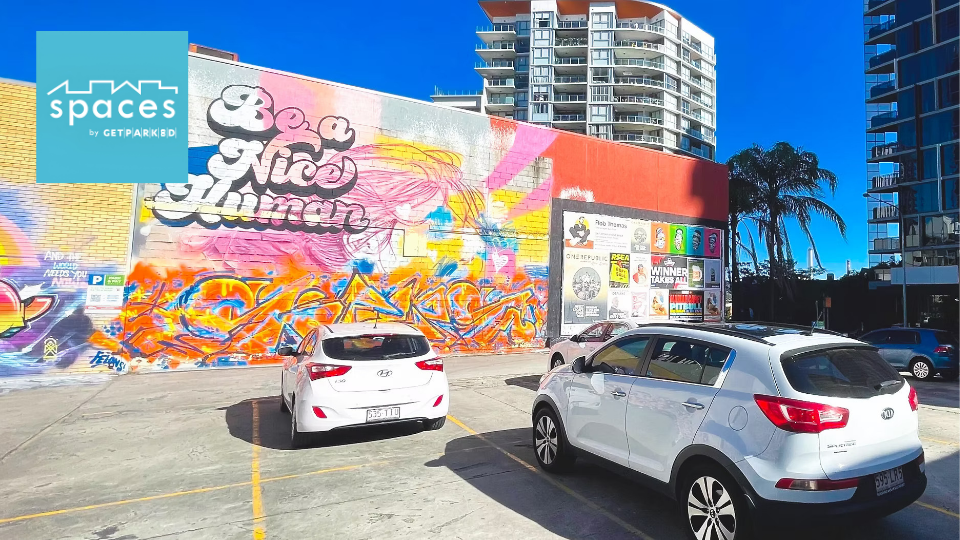
Melbourne’s growing number of development sites sitting idle while moving through planning, funding and construction approvals has created a new opportunity for Spaces x Get Parked, as the Queensland-founded space activation business expands its presence in Victoria.
Founded in 2013, Get Parked began with a simple belief, spaces simply are not being utilised effectively. What started as a solution to flexible parking challenges has since evolved into a broader space activation business focused on transforming under-utilised land and buildings into productive, revenue-generating assets.
Now operating as Spaces x Get Parked, the business works with developers, property owners and asset managers to activate vacant sites during lengthy interim development periods. The model is built around making the best use of an asset while preserving its future development potential.
General Manager of Spaces x Get Parked, Trent Pridmore says “The possibilities of what we can do, and who we can work with, are endless, but ultimately what we’re about is very straightforward: simply connecting people to useful spaces.”
Spaces x Get Parked effectively works as an extension of the developer’s team, taking responsibility for managing, maintaining and optimising dormant spaces while developers focus on progressing their longer-term plans. Activations can range from managed car parking and warehouse storage to office space, hardstand and tailored solutions shaped around the requirements of an individual site.
Using the company’s bespoke space management platform, ParQ, the model supports the complete property lifecycle, activating dormant property before development, supporting site requirements during construction and managing space once projects are complete.
For Melbourne developers, that proposition is becoming increasingly relevant.
There is no shortage of projects within the city’s development pipeline, but the period between acquiring a site and commencing construction can stretch for years.
The Victorian Government’s Urban Development Program identified 59,171 dwellings across Melbourne within its “firm” major redevelopment pipeline, which includes projects with current planning approval or being marketed, with another 38,271 dwellings considered “likely”. UDIA’s 2026 State of the Land report similarly highlighted the challenges facing the sector, with Greater Melbourne's multi-unit pipeline contracted 14 per cent during 2025 to 72,570 apartments, while the number of apartments classified as deferred increased 25 per cent over the year.
For Spaces, those extended development periods represent an opportunity to recognise hidden value where others may simply see a vacant site. Trent said “almost everywhere in Melbourne, there is surplus space that could be better used: vacant warehouses, buildings scheduled for demolition ahead of redevelopment, or surplus land awaiting its permanent utilisation.”
Recent examples across Melbourne include permitted sites in Box Hill and Ringwood that have remained vacant while development plans have stalled or changed, while several major inner-city sites have also changed hands after their original projects failed to progress.
Rather than leaving land fenced off and generating little or no return, Spaces assesses the property and determines how it can be repurposed through flexible, short-term activations that generates immediate revenue while prioritising preservation of the future development. The company is positioning vacant land and buildings not simply as holding costs, but as assets capable of producing value throughout that waiting period.
The approach has already been applied across more than 350 sites around Australia. Spaces x Get Parked now has dedicated teams operating across Queensland and Victoria as it expands nationally.
Its Queensland portfolio demonstrates how broadly the model can be applied.
At a South Brisbane property awaiting demolition and redevelopment, Spaces initially took over 37 excess parking bays before identifying an opportunity to activate vacant office areas as existing leases expired. The building was transformed into a flexible commercial hub incorporating office spaces, consulting rooms, meeting facilities, and parking.
The activation now generates approximately $500,000 in annual revenue without additional investment from the owner, while short-term leasing arrangements preserve the flexibility required for future redevelopment.
That same approach is now being brought more extensively into Melbourne.
“We’re really excited about rolling our model out in Melbourne,” Trent said, “and we’re looking forward to working with people both with space that could be better managed and used and with those who need space solutions on a flexible basis.”
With $816 million worth of development sites changing hands across Melbourne’s CBD and metropolitan markets during the first half of 2026, including $492 million in apartment development sites, purchasing a development site does not necessarily mean construction will immediately follow.
Planning processes, financing, construction pricing and pre-sales can all extend project timelines.
It reflects the philosophy underpinning the company’s growth from a parking operator into a broader space activation business: there should be no such thing as wasted space.
In a Melbourne development market where thousands of apartments and major projects remain somewhere between planning and construction, there is considerable scope to put that philosophy into practice.

Speak to the team about leveraging the Apartments.com.au audiences and services for your new development.

Greg Billings
Director of Residential Projects

Sonia Fava
Director

Nick Clydsdale
Senior Director

Heath Thompson
Director

Todd Matheson
Director

Thomas Panson
Project Sales & Marketing Agent

Scott Jessop
Head of Sales & Marketing

Alex Adams
Head of Sales & Marketing and
Head of New Business

.png)




.jpeg)




.jpg)


.png)



-03.png)







.png)

.png)
.png)




_page-0001.jpg)
.png)







.png)



.png)


-01.png)


