By
Joel Robinson
•
9
min read


Three development sites. Three experienced Melbourne developers. Not one "develop" verdict.
That was the outcome of the Develop, Divest, Delay segment at the Apartments.com.au Market Insights Live event in Melbourne. Host Joel Robinson walked Chris O'Keefe, Time & Place, Illan Samuel, Samuel Property, and Katya Crema, Hip V. Hype, through sites in Brunswick, St Kilda and Abbotsford. Each panellist had to say whether they would build, sell or wait.
The verdicts were telling, but the reasoning was more useful. Across the session, the panel kept returning to the same pressures: construction costs outpacing revenue, funders capping how large a project can be, and a buyer pool concentrated in a narrower price band than many sites are priced for.
The three panellists run businesses at very different scales, which shaped how each read the sites.
Time & Place is a multi-sector developer working mainly across Melbourne and Sydney. It recently completed 88 QB, with 380 apartments and a hotel. It has Park Modern (around 220 apartments) under construction, Park Street (around 270 apartments) approved to start next year, and mixed-use projects in Northcote and Glen Iris in the pipeline.
Samuel Property has delivered around 15 projects over 17 years, starting with five townhouses and 20-apartment buildings. It recently completed an 89-apartment tower, has 73 townhouses under construction, and has a project of around 250 apartments coming next.
HIP V. HYPE is ten years in and focused on boutique apartments and townhouses. It has just started construction on its seventh project, Park Life 2 in Brunswick. It also runs an in-house sustainability consultancy and has recently launched a building services engineering business.
Asked how site selection is going, all three described a slow, selective process. Illan Samuel summed it up: "I think we've never looked at more and bought less."
The panel worked through three sites: a nearly 3,000 square metre Brunswick site currently operating as a 30-room hostel; a smaller corner block on Alma Road, St Kilda, already approved for a 17-level tower; and a site on Victoria Street, Abbotsford, in a pocket seeing significant activity.
All three sites drew either a delay or a divest. None drew a develop.
The Brunswick site, offered for the first time in nearly 100 years with no plans currently in place, was a unanimous delay.
Katya Crema, who has lived in Brunswick for ten years, pointed to the site's sensitivity within the local community:
"This site is particularly sensitive to the Brunswick market. The Brunswick community are really tightly bonded, and they talk, and I reckon doing a project like this right now would be tough."
She also put a number on the feasibility challenge:
"In order to get a project like this to stack, you've got to be selling at 13 and a half, 14,000 a square metre, and I don't think this site right now can support that. We're maxing out there for Brunswick."
Illan Samuel echoed those concerns, suggesting the substantial existing improvements might lend the site more to an owner-occupier, such as a school or medical use, than a developer.
Chris O'Keefe acknowledged the emotional pull of the site before explaining why the numbers don't work:
"When you look at it from an emotive point of view, you look at this site and you go, 'It's a cracker'. The best thing about it is the size, and it's elongated. The worst thing about it is the size, and it's elongated."
He estimated the site would likely land at four levels, with a commercial ground floor too small to secure a supermarket. If he held it, he would consider cutting the site in two and land banking one half with some income, staging the project to let the market catch up.
"I wouldn't buy it right now. But if I had it, I would delay just because we're a cyclical market. It will come good at some point."
The Alma Road site, a smaller corner block approved for 17 levels and 94 apartments, currently holds 21 one-bedroom units generating around $180,000 a year in holding income. It was a divest across the panel.
Illan Samuel, who had looked at the site previously, said he could not get his head around the current permit:
"Three-level basement's super problematic. It's not that great a location. I don't think the amenity's that great."
He suggested the site might suit a build-to-rent product similar to the nearby Beach House, but noted that at around 100 apartments it was probably too small to excite build-to-rent operators, leaving it in the "too hard basket".
Katya Crema said HIP V. HYPE had looked at a similar site further up the road around five years ago, which didn't stack up at rates of around $11,500 per square metre:
"For us, it would be a clean divest."
If she were forced to hold it, she would look at an entirely different model, such as co-living or one-bedroom studios offering a more affordable housing option for young people in the area.
Chris O'Keefe agreed, pointing to the busy road and the difficulty of delivering amenity in a building of that size:
"Construction is going to be hell. You're going to be in a nightmare trying to build this thing."
If he had to hold it, he said he would be looking at a non-apartment use altogether.
The Alma Road site prompted a broader discussion about the value of buying a site with an approval already in place.
Illan Samuel warned that a permit can sometimes be a negative:
"When you've got an approval in place that's got a three-level basement, it's actually hard to turn around and say, 'I actually don't want to do that'. Whether you're dealing with council or DTP, they like that somebody else agreed to that previously."
He added that the site transacted in 2019 for around $11 million, with agents now quoting in the high teens:
"That doesn't pass the sense test when they've added a permit in six, seven years, and even that permit now isn't quite working. Construction costs, obviously we know what they've done, but revenues haven't really kept up."
Katya Crema offered a counterpoint from HIP V. HYPE's York project in South Melbourne, which came with a VCAT permit. The team went back to VCAT with a complete redesign, a different architect and an additional level, securing what she described as a far superior outcome. She said the current planning environment, with many developers taking existing permits back through the Department of Transport and Planning (DTP), made it "probably a good time to get an elevated permit".
The Victoria Street site in Abbotsford drew a divest from all three panellists.
Chris O'Keefe said the pocket simply didn't suit Time & Place's business, pointing to the company's recent experience at Camberwell, a 30-apartment building marketed to owner-occupiers:
"It's been the toughest apartment building we've had to sell, and there was only 30 of them in it."
Illan Samuel said the site was land rich with good existing improvements, but that sale rates in the pocket wouldn't make a project work right now:
"Being in the middle, not geographically, but the middle of the market, is sometimes a place you don't want to be. It's good, but it's not great."
Katya Crema noted HIP V. HYPE had successfully delivered 19 townhouses nearby, but said the depth of this site presented a problem:
"The apartments that face the river have immense views and outlook, and you could sell those at a premium. But a problem with a deeper site like this is the other apartments that you have to sell, you're just not going to get anywhere near the rates. They're probably the ones that you get stuck with."
With the host noting that around 90 per cent of development sites currently on the market look like these, the conversation turned to what it would take for them to transact.
Illan Samuel said buying at the right price remains critical:
"Buying at the right price is like starting on pole on the Formula One grid. You get that right, and it's pretty hard to get the rest wrong."
Chris O'Keefe, however, argued the question itself was wrong:
"How cheap the land is getting is probably the wrong question. It's how fundable is the project? For us, that's what it's all about."
He explained that fundability ultimately comes down to how much equity a developer is willing to put in, and over what time horizon. His test is having a clear line of sight to who is buying:
"If we end up with 5% three-bedders at the end, it's probably okay. If you've got 40% of residual stock at the end and they're looking to equity cure, and you think that's what's going to happen day one, we're not doing that project. So it doesn't matter what the land price is."
Chris O'Keefe used Time & Place's Northcote site as a case study in how funder appetite shapes project scale.
When the company bought the site around seven years ago, funders said they would not back the project unless it delivered at least 600 apartments with a debt cheque of around $700 million. Two years later, after the approval process, funders were asking for something closer to $300 million. The result is that Northcote will still deliver around 650 apartments, but staged as two projects of roughly 400 and 200 apartments to make the funding bite-sized.
"If you can keep it under the $300, $350 million, it seems like the appetite for debt and the debt market is there. They're quite aggressive about it. The minute you tip over $400 million, the bell goes off and they say, 'There's a lot of risk in this, guys. We need 60% QPS'."
(QPS refers to qualifying pre-sales, the level of pre-sold stock a lender requires before funding construction.)
He noted that Time & Place's subsequent projects reflect this, with Park Modern at around 220 apartments, Park Street at around 270, and its Sydney projects at around 100 to 150.
Illan Samuel said Melbourne's challenge is not demand but supply, and that developers need to plan sales, construction and funding simultaneously rather than in sequence. He said lender depth, across bank and non-bank, remains strong, as does the tier two builder market.
He also argued for design discipline:
"Less is more. How do we have less in the building that's not actually adding value? How do we get less transfers, less band beams? Things that buyers aren't going to pay for, frankly. When you think about concrete and steel being 30 to 45% of the construction cost, how do we get that as efficient as possible?"
On amenity, he said the key is matching it to the buyer, so residents who use it are happy to pay owners corporation fees and those who don't aren't complaining.
He also pointed to a story he said isn't being told: build-to-rent has lifted rents across Melbourne, benefiting build-to-sell investors.
"5% rental guarantees aren't a problem. It doesn't touch the sides in the lease-up periods."
Katya Crema said HIP V. HYPE sells almost exclusively to owner-occupiers, including a number of interstate buyers from the ACT, Sydney and Brisbane choosing to relocate to Melbourne, driven by affordability.
Park Life 2, funded with Cbus Property as equity partner, launched in September last year and is close to 75 per cent sold, all to owner-occupiers, with an average price point of just over $1 million. She said young professionals, next home buyers and first home buyers using government grants remain active, with much of the current activity sitting in the $1 million to $1.5 million range.
Illan Samuel said older buyers are largely sitting on the sidelines:
"We talk about FOMO. A lot of the older buyers, there's the OMO: I'm okay missing out."
He said attainable product widens the buyer funnel, and pointed to Melbourne's fundamentals, including net interstate migration into Victoria now exceeding outflows for the first time, alongside population growth, employment and education. He challenged developers to create product at attainable price points that buyers actually want:
"Something that isn't just a pretty boring four walls in a box, but it's actually something that younger professionals go, 'Okay, I actually want to be here'."
Katya Crema estimated first home buyers are typically aged 30 to 35, purchasing one-bedroom apartments between $650,000 and $750,000, or two-bedrooms between $920,000 and $1.1 million.
Chris O'Keefe said demand in Time & Place's projects also sits around the $1 million to $1.5 million mark, and that overseas investors are still buying despite concerns:
"They don't like that our government's called it the foreign owners surcharge. Just call it something else. But there are challenges, but they're buying, because they're buying on a price point and a yield."
Illan Samuel added that Australia's stable government, growth fundamentals and secure title system remain a real appeal for offshore buyers.
With the Victorian state election in November, all three panellists said they hoped for a change of government.
Chris O'Keefe said the government had been in too long, though he credited its planning reforms:
"To their credit, I think the last few years the DFP process has been terrific. I wish they'd done it ten years ago."
He said he hoped an incoming government would retain that process and reform the tax regime, "even if it's just optics", to signal Victoria is open for business and investor friendly.
Illan Samuel said the election itself is an important marker, with many people waiting for the result, and that regardless of the outcome, the contest would "keep Labor honest". Katya Crema said HIP V. HYPE advocates for better housing to both sides of politics, but agreed a shake-up would not be a bad thing for the state.
Illan Samuel closed the session by revealing Samuel Property's next site: a six-lot assembly on Park Street, South Melbourne, put together over around 26 months. The project, currently progressing through the DTP process, will be the company's biggest to date at around $300 million, drawing on lessons from its Louise project.
The full Develop. Divest. Delay. panel from the Melbourne Market Insights Live Event is available to watch above.
For the full event summary, presentation download and photo gallery, visit: VIC Market Insights Event Summary September 2026
Join the waitlist for upcoming Market Insights Live Events: Market Insight LIVE Events Join the Wait List
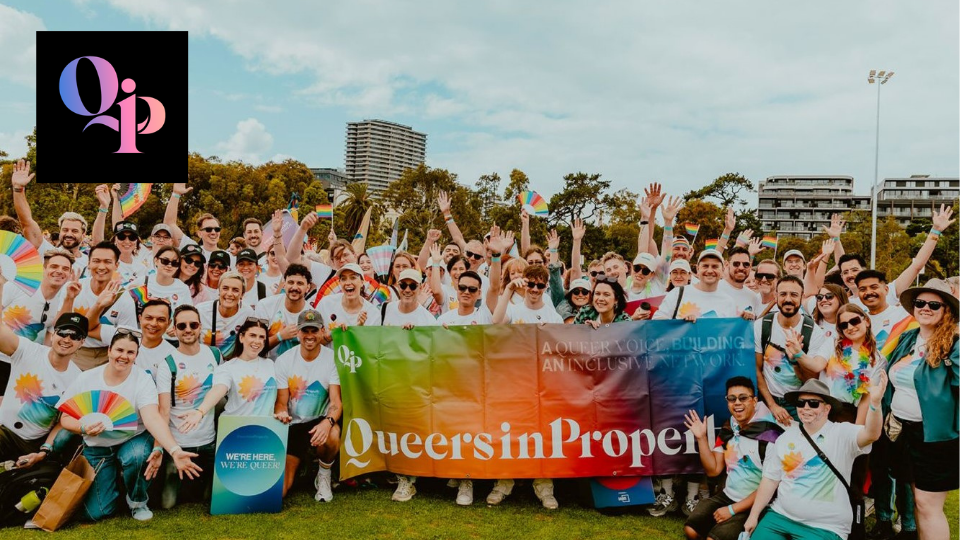
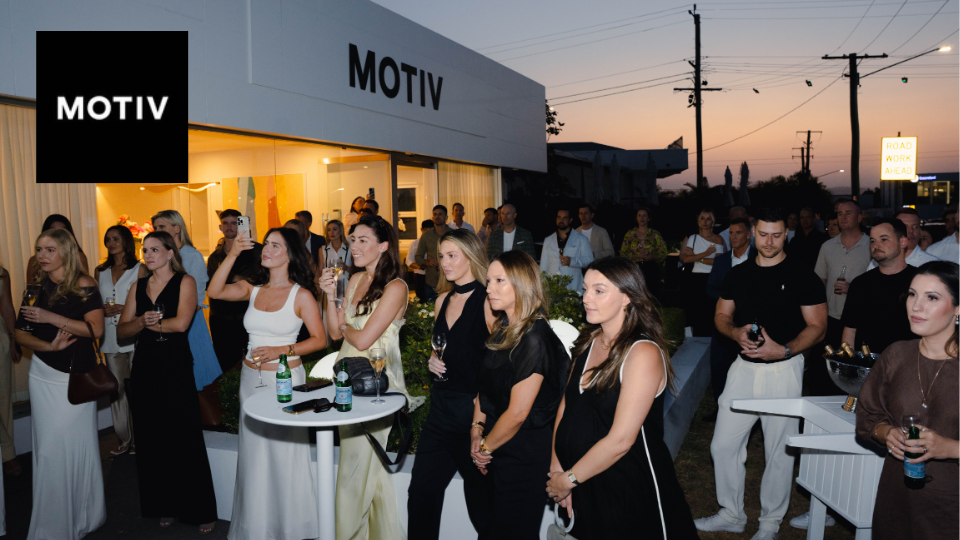
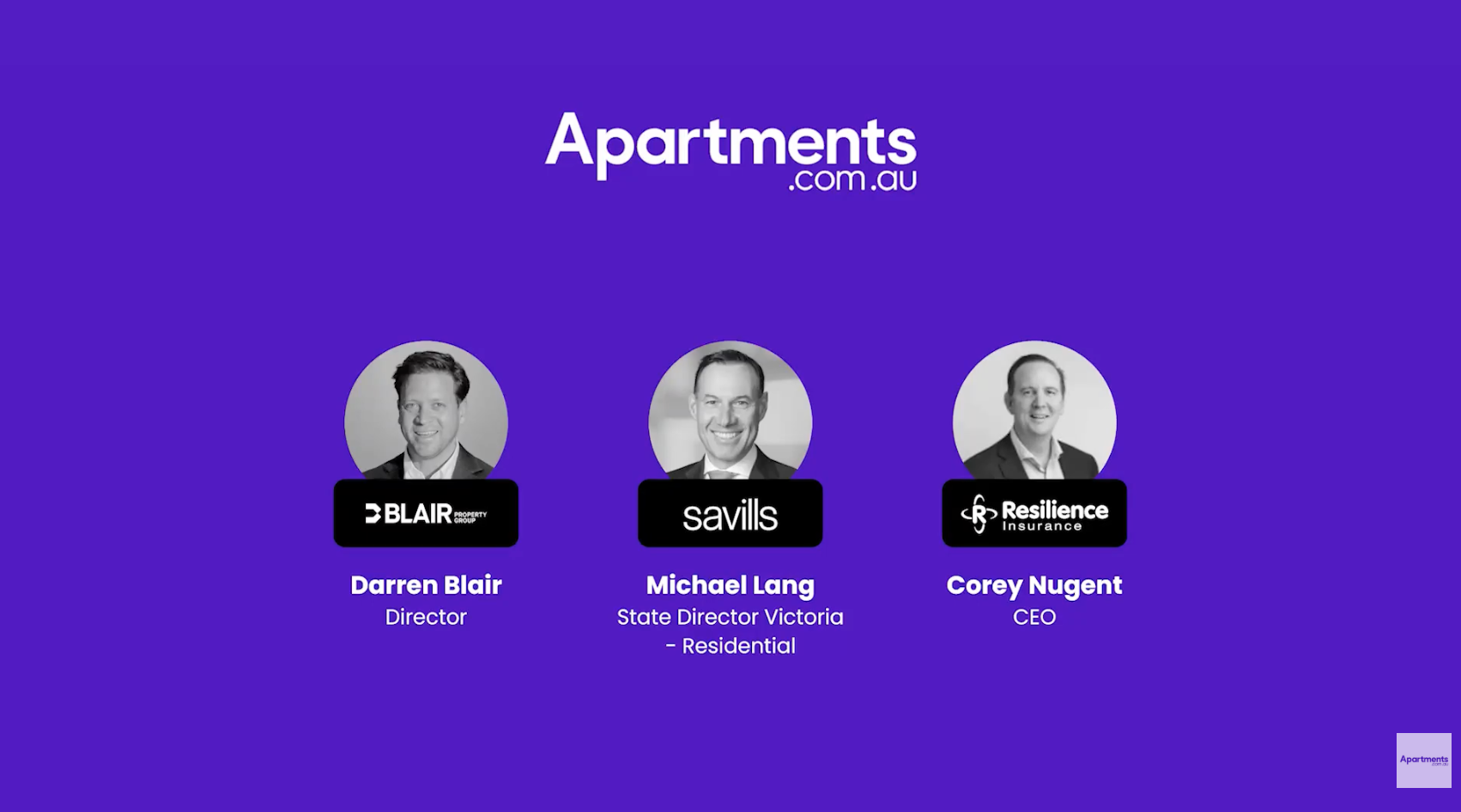
In partnership with Resilience Insurance, iCIRT from Equifax, Artis, Urbis, Queers in Property and Conversion Assist.

Speak to the team about leveraging the Apartments.com.au audiences and services for your new development.

Greg Billings
Director of Residential Projects

Sonia Fava
Director

Nick Clydsdale
Senior Director

Heath Thompson
Director

Todd Matheson
Director

Thomas Panson
Project Sales & Marketing Agent

Scott Jessop
Head of Sales & Marketing

Alex Adams
Head of Sales & Marketing and
Head of New Business





.jpeg)






.jpg)





.png)



-03.png)








.png)

.png)
.png)






_page-0001.jpg)
.png)






.png)



.png)


-01.png)


