By
Joel Robinson
•
4
min read

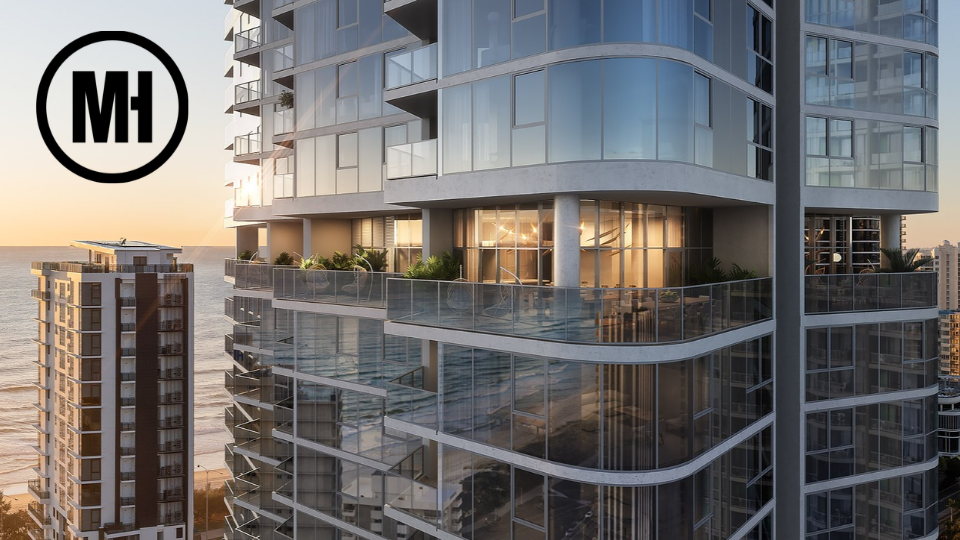
A slower market, but a captive audience.
OK, for the bad news. The off-the-plan market has cooled, and developers should be honest about it. Industry experts point to dire conditions across the national apartment sector and while slower on the Gold Coast, there are still some positives.
On the Gold Coast, sales are holding rather than surging: Urbis recorded just over 300 apartment sales in Q2 2026, much the same as Q1. At the time of this event the Q3 data was due to be released.
Competition for those buyers, meanwhile, is at a record. Urbis is monitoring 97 new projects, the most it has ever tracked, and 82 cranes stand over the city. When the same pool of buyers is spread across more projects, every marketing dollar has to work harder and cost per lead higher.
The buyers who were active in the first half of the year spent big. The weighted average sale price rose to $2.634 million in Q2, up from $2.228 million in Q1, and the southern beaches averaged $4.874 million. They are simply more selective.
And for five weeks between Boxing Day and Australia Day, hundreds of thousands of potential buyers come to you.
National campaigns in metropolitan newspapers, national television and broad portal or social buys are built to create awareness among people who might one day visit. In a hot market, that scattergun reach can pay off. In a slower market, it mostly buys impressions from people who are not ready, not qualified or not coming.
Over summer, the logic flips. The interstate buyer a national campaign is chasing is already walking The Esplanade at Burleigh. The Melbourne downsizer is having coffee on James Street or walking into Surfers Paradise from the Marriott Hotel. Paying to reach them in their home city while they are here means paying twice for the same person.
National brand-building has a place over the long run, but it should be the first line cut from a summer budget, not the last. And you have that covered with Apartments.com.au with its lead-gen capability, great editorial content showcasing projects and the ability to share that content beyond local. They have you covered while you direct your primary energy locally.
The summer budget should follow the buyer, and from Boxing Day to Australia Day the buyer is local. Six places earn the spend:
• The sales suite first. Stay open through Christmas and January, with evening hours when the heat breaks and senior sales staff on the floor. A closed suite in January is the most expensive saving a developer can make.
• Hoardings that work hard. Gold Coast Airport. Beachfront site hoardings are seen by thousands of visitors a day. Use them for the builder’s name, the latest construction milestone and a reason to visit the suite.
• Geo-targeted digital. Social and search campaigns fenced to the coast’s beachside suburbs reach visitors while they are physically here, at a fraction of the cost of a national buy.
• Local media. The Gold Coast Bulletin’s real estate guide, and lifestyle titles such as Ocean Road – which comes out in January and is picked up in cafés, holiday apartments and hotel lobbies all summer, and read by the locals hosting visiting family – are a cost effective way to amplify your project in this period.
• Local ‘independent’ newsletters focussing on what’s going on in the area of your development.
Every project on the coast can promise a view; far fewer can promise delivery. “Right now, certainty is the most valuable commodity a developer can offer,” says SPG Land marketing director Stephen Wang, whose Paradiso Place has recorded more than $100 million in sales and is under construction. Central Equity’s Karl Kutner, with $400m in sales in its Palmera project in Surfers Paradise, says the market will “place a premium on projects that can demonstrate genuine delivery certainty, with construction underway, finance approved and an established builder appointed.”
Local amplification is the best way to prove it. A visitor can watch a crane at work, walk past a named builder’s hoarding and stand inside a finished display apartment. No national advertisement can match that.
It also suits the buyer. Analyst Michael Matusik, who we work very closely with, says the market now caters to wealthy downsizers who “love the Gold Coast, but they want to downsize, they want to stay in the same location.” Many sell their homes unencumbered, notes Urban Activation’s Matt George, one of Australia’s leading project marketing agencies, so rate rises barely touch them. On holiday, they have the time, and often the family, to look properly.
January is a slow month for news, and local editors are hungry for stories. Line up a construction milestone for early January and a sales update before Australia Day, and keep spokespeople available while competitors are on leave. Use your media agency to dominate that vacant space. At MediaHunt, we have been working on this since early October.
Thinking local does not mean forgetting interstate buyers once they leave. It means reaching them as individuals rather than as a national audience. Capture every summer enquiry properly, including budget, timing and the precinct they liked. Then follow up once they are home in Sydney or Melbourne with a video walkthrough of the apartment they viewed, a construction update or a private briefing in their city.
Retargeting people who visited the suite or the project website costs a fraction of a national campaign and reaches only those who have shown real interest. Palmera’s buyers, Kutner notes, have come from South-East Queensland and interstate. The interstate buyer matters; but the most cost effective place to meet them is on the Gold Coast.
The fundamentals favour patient developers. Colliers’ David Higgins estimates a housing shortfall of more than 5,000 dwellings a year, and migration has held at around 15,000 people a year since the pandemic. In a slower market, the winners will not be those who spent the most nationally, but those who were most visible locally while the buyers were in town.
I would be focussing all my editorial and marketing energy into this five-week period. It’s tough out there, but when the going gets tough, the tough get going. And you can do it cost effectively.
And finally. We need to hold our nerve. The factors that have popped the bubble, such as the Federal Budget earlier this year, does not change where the Gold Coast is heading as a city.
The numbers don’t lie. 15,000 people migrating to the Gold Coast every year. Multi-faceted industries driving a $55 billion annual economy. And most importantly a dwelling undersupply which is only going to get worse for a range of reasons.

Speak to the team about leveraging the Apartments.com.au audiences and services for your new development.

Greg Billings
Director of Residential Projects

Sonia Fava
Director

Nick Clydsdale
Senior Director

Heath Thompson
Director

Todd Matheson
Director

Thomas Panson
Project Sales & Marketing Agent

Scott Jessop
Head of Sales & Marketing

Alex Adams
Head of Sales & Marketing and
Head of New Business