By
Joel Robinson
•
3
min read


There is no shortage of development sites for sale on the Gold Coast, but finding one that stacks up financially is becoming increasingly difficult.
Rising construction costs, ambitious land valuations, shifting buyer sentiment and greater exposure to development finance are forcing some of Queensland's most experienced developers to become increasingly selective about their next acquisitions.
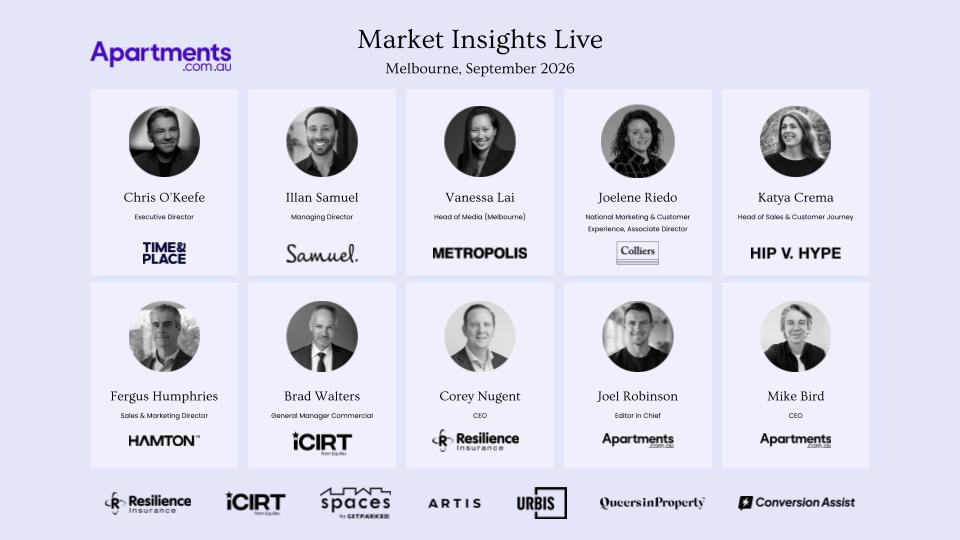
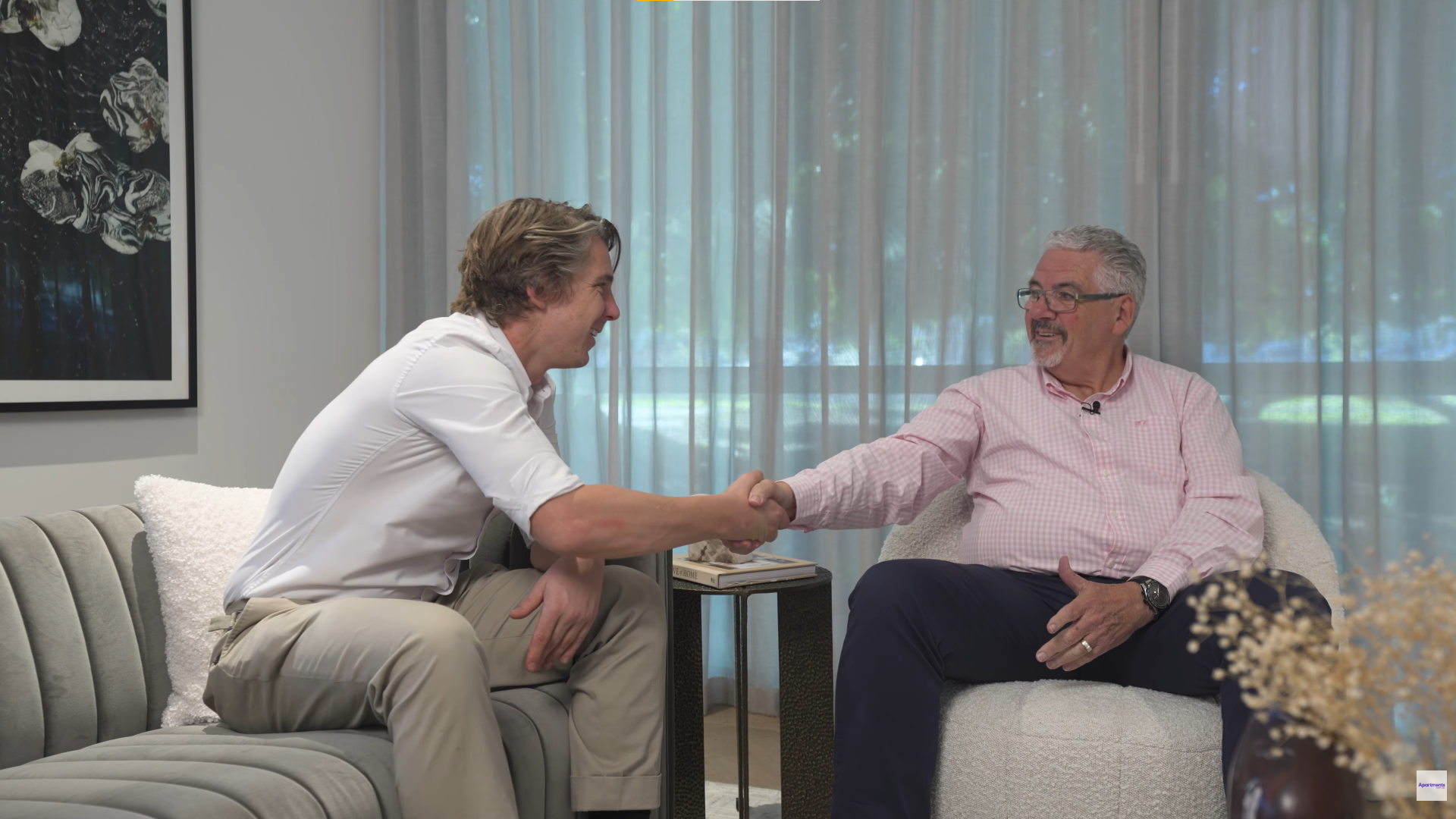
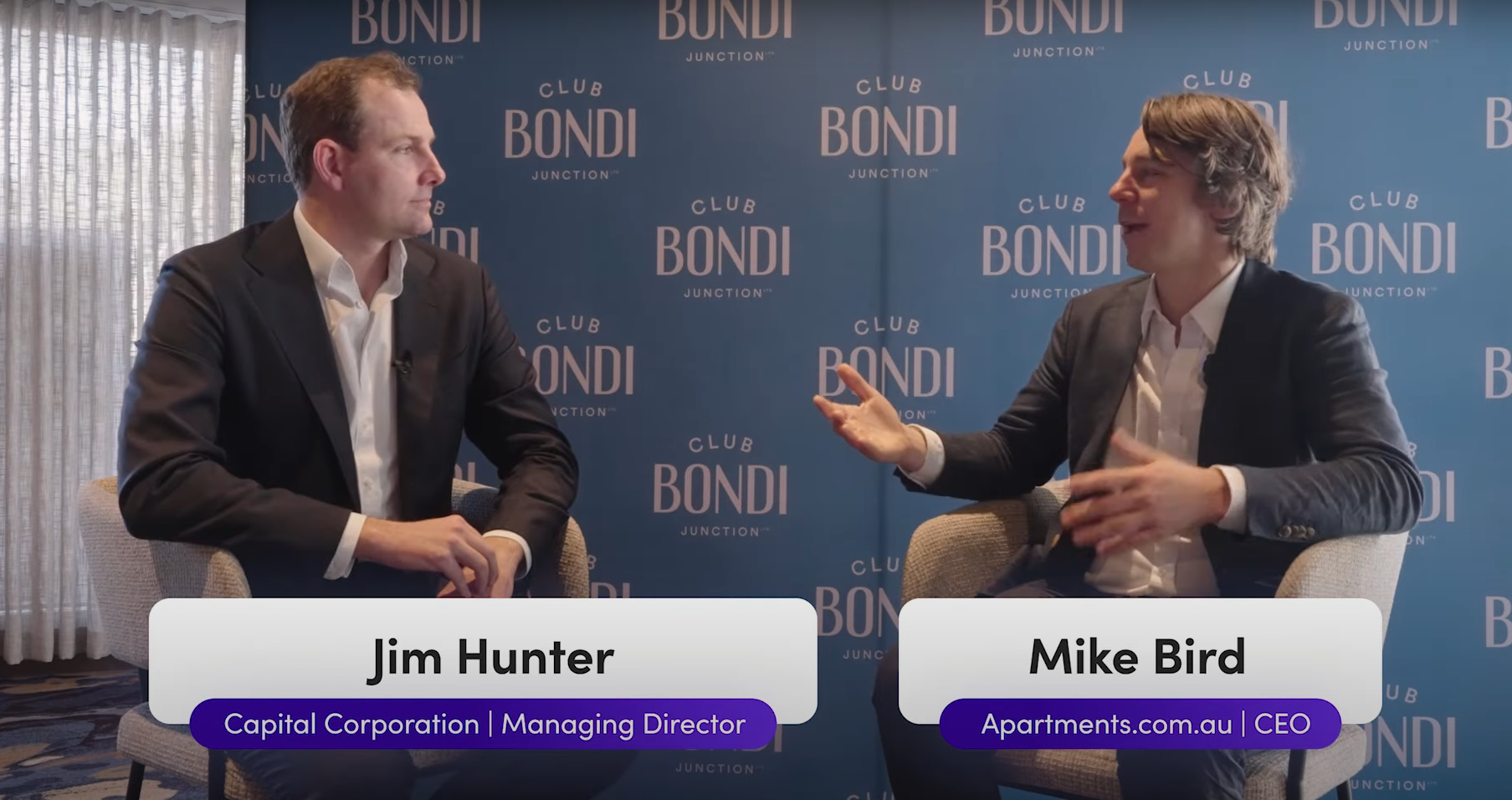
To close Apartments.com.au's Gold Coast Market Insights Live event, Mike Bird was joined by SIERA Founder and Director Brent Thompson, Drew Group Managing Director Jonathan Drew and IGNITE Projects Director Josh Foote for a round of Develop, Divest, Delay.
Presented with three real development opportunities across Coolangatta, Broadbeach and Palm Beach, the panel explored what separates a viable development site from one better left alone.
The first site presented to the panel was a Coolangatta development opportunity comprising 10 of 12 existing apartments, with two remaining owners yet to sell.
Despite the strong performance of the southern Gold Coast in recent years, all three developers were unanimous in their decision to divest.
For Foote, the outstanding owners represented a significant negotiation risk.
“They always carry the aces, and they're the least negotiable out of everyone,” Foote said.
Even if the remaining apartments could be secured, the site's long, narrow configuration and neighbouring buildings presented architectural and commercial challenges, particularly given buyer preferences for northern aspects.
Foote also pointed to the volume of comparable apartment stock in the southern Gold Coast, noting that a product that would have sold comfortably three years ago now requires considerably more scrutiny.
The second opportunity was a 1,200 sqm Broadbeach site with approval for 146 apartments and a history of false starts.
For Foote, an existing development approval carries little weight when acquiring a site, particularly given the individual design philosophies and target markets of different developers.
Repeated attempts to progress a development were of greater concern, potentially signalling underlying feasibility issues.
Thompson highlighted the risk of the site's eastern view corridors being built out and the difficulty of securing off-the-plan sales in the current market.
Drew, however, saw longer-term potential in the site's proximity to public transport, established retail and surrounding infrastructure.
“As the Gold Coast evolves as a city, sites like this will become more and more important because we will run out of key A and B grade sites,” Drew said.
While the immediate development prospects were limited, Broadbeach's evolution into a more densely populated urban centre could eventually change the site's appeal.
The third site, a 1,650 sqm amalgamation of four existing homes west of the Gold Coast Highway, prompted discussion around the relationship between location, construction costs and achievable apartment prices.
Drew noted that building on either side of the highway costs largely the same, yet developments west of the highway often struggle to achieve the sales rates needed to justify construction.
There was, however, an acknowledgement of an opportunity around central Palm Beach, where established amenity and walkability support a different residential proposition.
Thompson identified an undersupply of genuine mid-market two- and three-bedroom apartments, particularly in well-connected locations.
Despite the growing number of sites coming to market, the panel agreed that acquisition opportunities remain limited.
Thompson said construction costs, rather than land prices alone, continue to undermine development feasibilities.
“In some of these cases, you could get the site for free, but you just simply wouldn't be able to deliver it still,” Thompson said.
Foote pointed to vendors' reluctance to accept losses on land acquired at elevated prices, while Drew noted an increase in mortgagee opportunities and conversations with financiers seeking solutions for stalled developments.
The panel also identified buyer sentiment as one of the most difficult risks to manage.
For Thompson, whose buyers are predominantly downsizing owner-occupiers, negative sentiment can have a greater influence on purchasing decisions than interest rate movements themselves.
The discussion concluded with a hypothetical question: given $50 million, where would each developer look to acquire their next site?
Drew said he would allocate $20 million towards land and retain $30 million as equity, reflecting his concerns about the risks associated with development funding.
Thompson would remain focused on familiar markets and established buyer demographics, while Foote would prioritise securing an A-plus site where growth in achievable sales rates could outpace construction cost escalation.
The discussion underscored a broader shift in the Gold Coast development market. Strong demand and desirable locations are no longer enough to guarantee a project's viability.
For developers, the discipline to walk away from the wrong site is becoming just as important as the ability to secure the right one.

Speak to the team about leveraging the Apartments.com.au audiences and services for your new development.